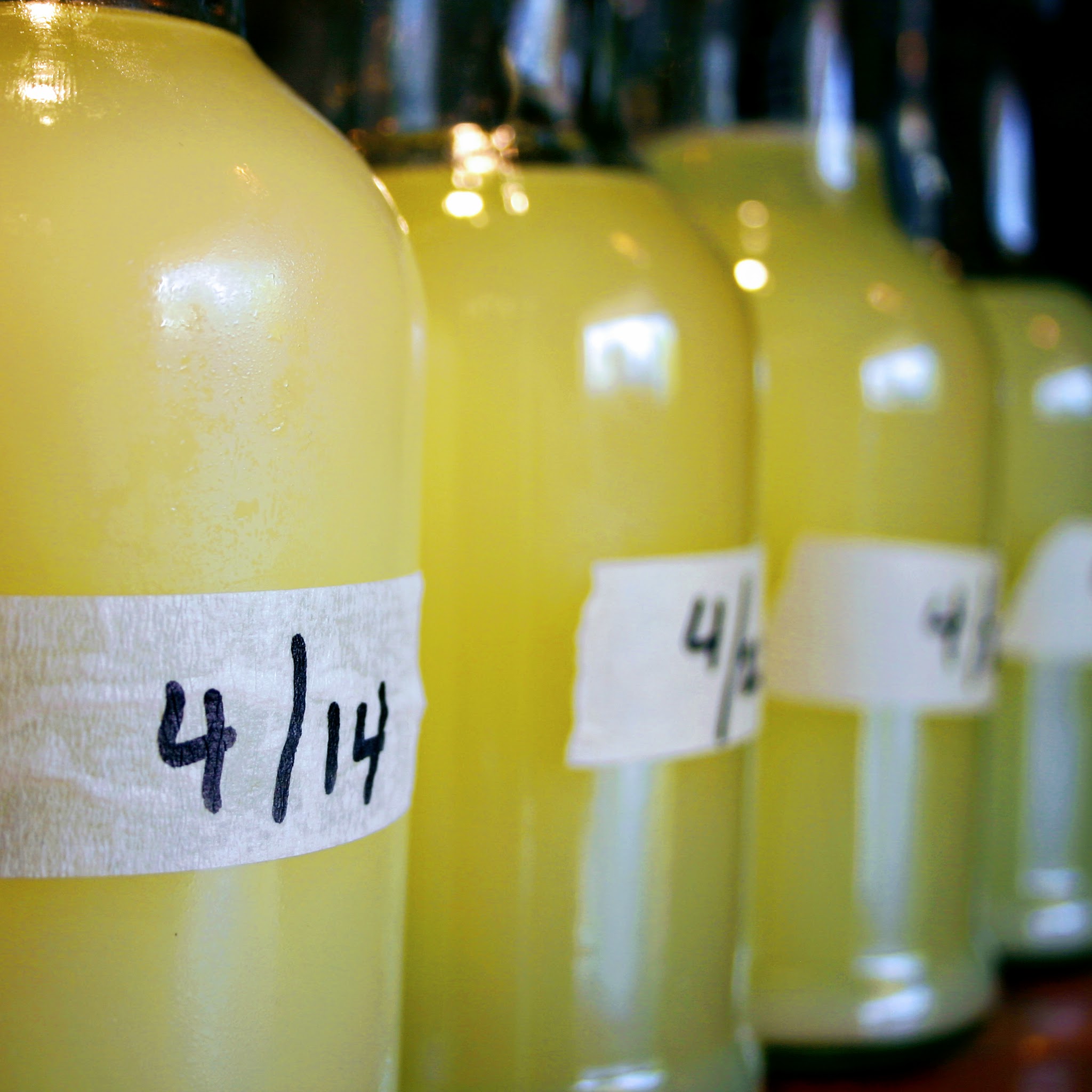
As far as I’m concerned, springtime is Dark and Stormy season. As the rain pummels the ground here in the Pacific Northwest, a little window of blue sky nestled between two dark clouds in the neighboring distance makes me wish I were watching the rain fall from across a dark ocean, my little Caribbean fishing boat safe and sound under that warm patch of sunlight.

I’d fill a tall glass with ice and a generous dose of Gosling’s Black Seal rum from Bermuda, then reach into a wooden crate and withdraw a chilly little bottle of homemade ginger beer. I’d sip the cloudy mixture of liquid sunshine and sweet, dark nectar while I mindlessly squeezed a fresh lime into the glass. Feet: Up.
The problem with living in Oregon when this mood strikes is the absence of little wooden shacks that sell cases of fresh ginger beer stacked on back porches. But with some readily-available ingredients, a recipe I’ve been revising for several years – and a few free minutes – I can easily transport myself to that little fishing boat on the sea.
You’re going to need a little bit of equipment to make ginger beer. It’s nothing too tricky (save for one tool) and most of it will last you a lifetime. So follow along, and remember: I promise you that this will be easy.
You have two options for carbonating your ginger beer: you can ferment it in the bottle, or you can carbonate on-the-fly with an iSi soda siphon. While the soda siphon is easier to use, for the sake of authenticity you might want your ginger beer fermented in the bottle.
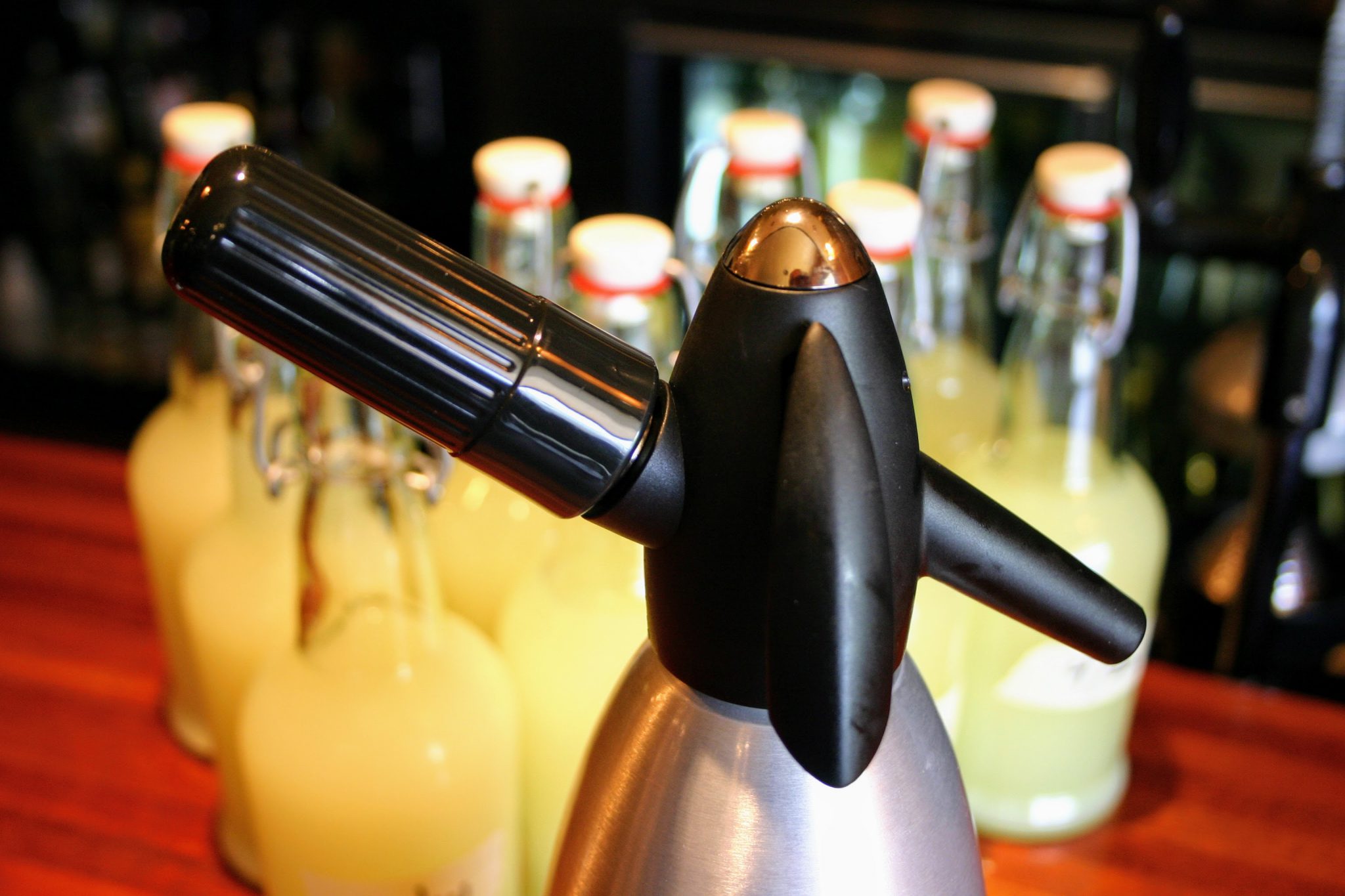
If you’re going to go the iSi route, pick up a soda siphon and meet me at the next step. The rest of you, follow me.
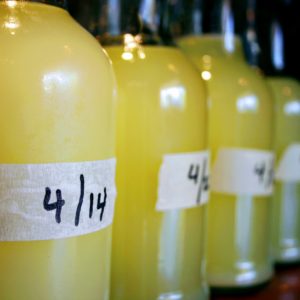
The first thing on your list if you’re going to be brewing in the bottle is any number of 16-ounce “EZ” flip-top bottles. You can find these on the internet, at a craft store, or at any homebrewing supply place. Pick up a few to start.
Next, find some wine yeast. I use Red Star Premier Cuvee champagne yeast. It’s sturdy, it hasn’t failed me yet, and it’s inexpensive. I pay about a buck for a packet that will make five gallons of this stuff.
Okay, on to making the actual ginger beer.
The only tricky piece of equipment I’m going to suggest is a juice extractor. Pick up the Juiceman Juice Extractor if you’re just going to be making this stuff at home, or the Breville Juicer if you plan on making a lot of it. Sure, you can use a grater, but you’re going to need to fine-strain your grated ginger to avoid any chunks in the final product. For the occasional home user, a Microplaner and some cheesecloth will be fine. But when making this by the case at work, I always turn to my juice extractor. The money is worth it if you want to make a lot of this stuff.
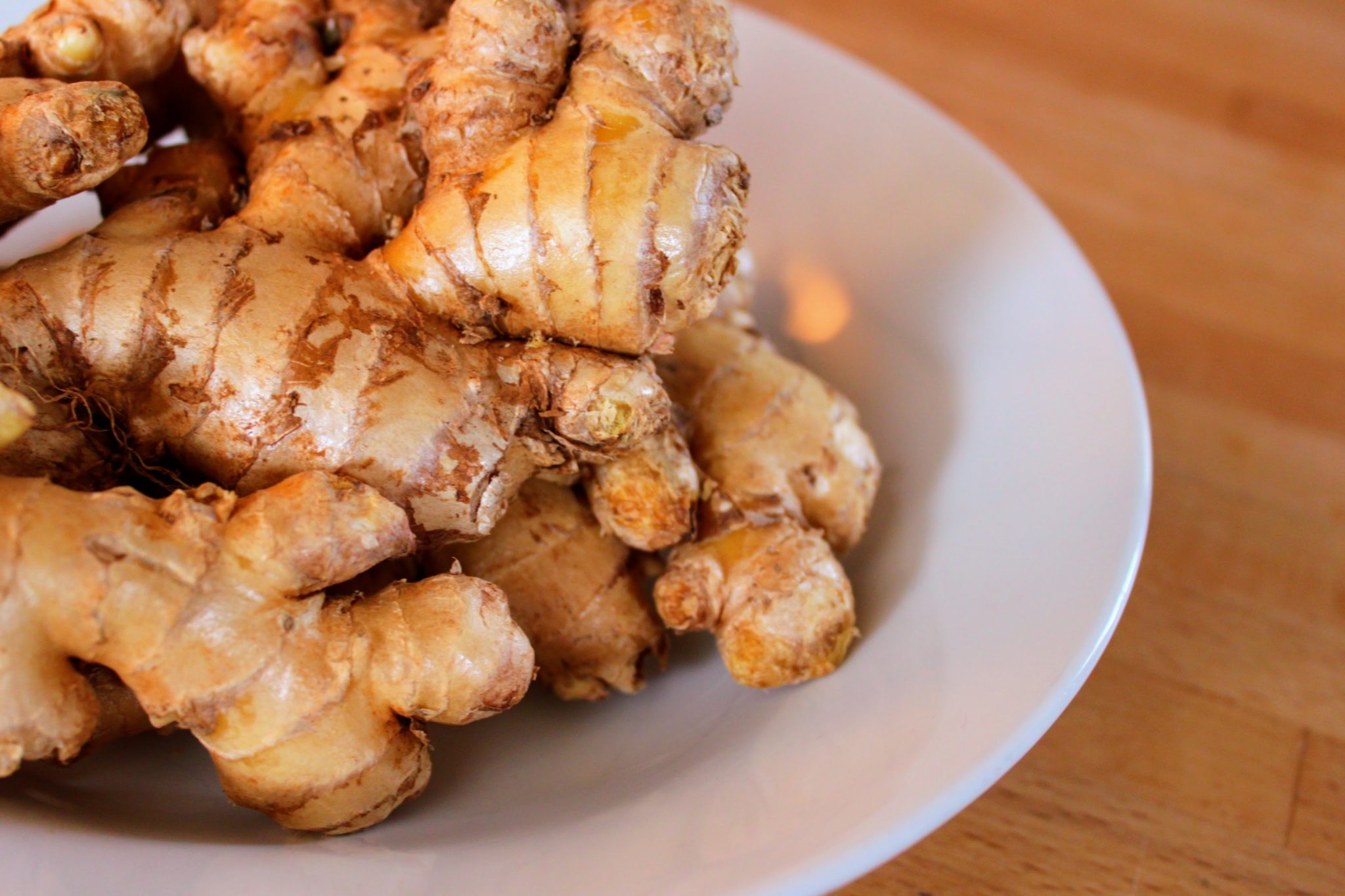
Peel and juice your ginger. I find that 1½ ounces of fresh ginger tends to work out to roughly an ounce of ginger juice.
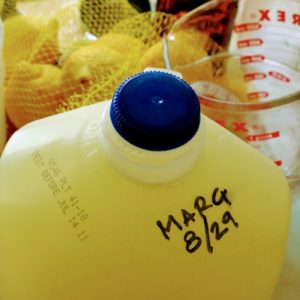
This base recipe will make one 16-ounce bottle of ginger beer, so multiply the proportions by the number of bottles you will be using. If you’re going the siphon route, note that the canister will hold 32 ounces of ginger beer. So double the batch, duh.
1 ounce ginger juice
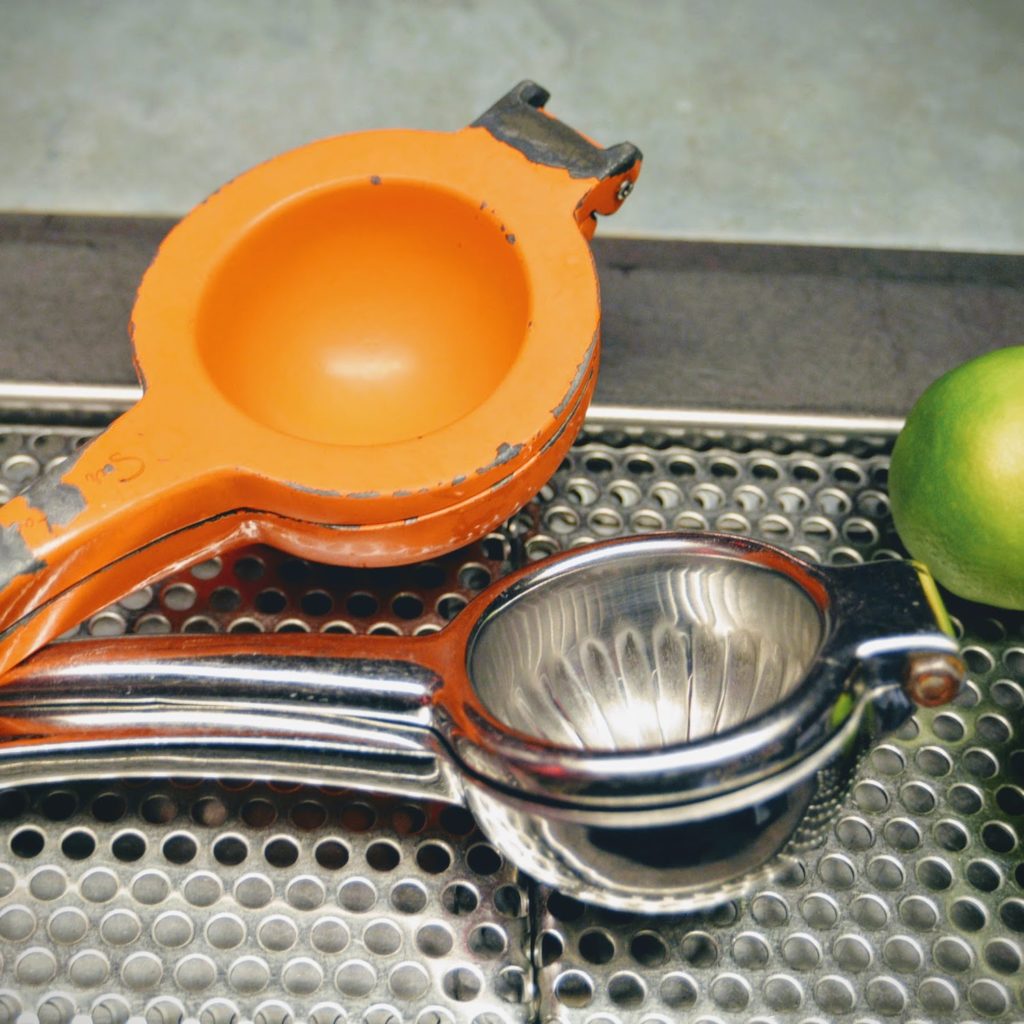
2 ounces fresh lemon juice, finely strained
2 ounces simple syrup
11 ounces warm water (cold if using the soda siphon)
Mix ingredients together. If using a soda siphon, pour ingredients into canister, screw on lid, charge with CO2, shake once, and refrigerate. You’re done.
If you’re using bottles, fill each bottle with 16 ounces of your mixture and add roughly 25 granules of champagne yeast. Seal the cap securely, shake well, and store for 48 hours – no more, no less – in a warm, dark place. After 48 hours have passed, refrigerate immediately to halt the process.
After your bottled ginger beer is well chilled, mix up a Dark and Stormy, sit back, and imagine you’re drifting along with me on that creaky little boat.
UPDATE: An easier and more consistent method for carbonating your ginger beer can be found here.
Cheers, friends. Have a beautiful weekend.
@irwin imo 1/8 is a bit much. I’m probably using 1/16 max. It’s not going to hurt anything but if you add too much you could have faster fermentation and issues if you use glass. Otherwise 1/8 could be ok.
The yeast granules are of different sizes. Is it basically 1/8 teaspoon of yeast or less?
@Ethan I was thinking about using Pectinex SPL as well to clarify. Have you had a chance to test this yet? I’d be really interested in your results or if you’ve had any luck with other fining agents.. also.. how’d things hold up in the centrifuge? thanks!
I’ve found that once you’ve juiced the ginger, let the juice rest over night before mixing as a good % of the starch will settle out
@J Dizzle – The introduction of pineapple juice could be a great idea. Not sure what method you’re using? (yeast or CO2) If you’re using yeast I’d just be careful as pineapple juice is around 10% sugar and lemon juice only around 2.5% so if you substitute and are using yeast you will just want to be careful of the extra sugar. But you’re using plastic bottles so you should be fine.
I just say this as my method is heavy glass flip top bottles with yeast and a 72 hour sit. I can’t really suggest this to anyone as you can get some bottles that go boom if you’re not careful. I only had it happen once with a bottle that had too much sugar though.
I’ve used lemon juice and that was nice. Tried lime juice but for some reason that killed my yeast. I’ve also done a dash of vanilla extract into the mix and that made for a very nice creamy ginger ale.
There’s not really a wrong way you can do it, just experiment and have fun.
One note about yeast, I typically use Redstar Pasteur Champagne yeast but this summer I was at my parents and made them some and they only had a wine yeast. Carbonation was different, stronger and nicer bubbles. There’s little differences with every ingredient you use.
One more thing–I juice my ginger with a Jack Lalanne power juicer that I got for $10 at my local Goodwill store. Decent juicers are pretty easy to find used and dirt cheap, just clean them very thoroughly and you’re good to go.
I’ve made this a few times, and it’s always fantastic. I use the yeast, but I just got an ISI siphon so I’m gonna try that way soon. As noted, a plastic soda bottle works well, but anymore I use a glass growler(got it for free from Goose Island on a mail-in promo) and a cheap plastic airlock and rubber stopper which cost less than $2.
I recently got some D&G Jamaican Pineapple Ginger Soda, and I feel like a fresh version with real pineapple would be much better. Anybody got any ideas on how to integrate fresh pineapple juice? Should I sub in pineapple for some of the citrus? Maybe make it as usual and add the pineapple after?
Also, my house cocktail with ginger beer is the Dank and Stormy, with Smith & Cross and a squeeze of lime.
Turns out I am not patient, so I decided to pull out my centrifuge and see how thirty minutes at 4000 rpm works for clarifying. Next time around I think I will see how various fining agents help clarify. I’m curious if Ultra Pectinex SPL will help. I realize it is all but ineffective against starches, but I’ll have to experiment and see if some parts of the ginger are affected.
If anyone has any experience with any fining agents or enzymes in conjunction with ginger, please let me know.
So I thought I was following this recipe from memory and it turns out I wasn’t even a little bit close.
Instead of following these directions, I decided to use 352grams of ginger, 176 grams of demerara sugar, 179 grams of cold water and 7.06 grams of citric acid. I tossed all of this in a blender and blended thoroughly for five minutes. Then I fine strained through steadily decreasing strainers and cheesecloth. The resulting mixture had a nice slightly acidic twang with bright ginger spice and a touch of sweetness. I am currently chilling it in my fridge while allowing the ginger starch to settle out of solution. I am wondering if I should further dilute with cold water before force carbonating
@ Blue Iguana – It’s safer to use plastic because you are able to judge where your at in the fermentation process. Soft bottle you need more time. Hard bottle, it’s ready to slow the fermentation with refrigeration and use.
Don’t be fooled “bottle bombs” are called that for a reason! Exploding glass bottles will cause serious injury and epic messes!
2016 & this thread is still going.
Making our first batch today, direct into glass bottles. I see most use plastic. Was bemused by the “25 granules of yeast”. I’ve watched vegans count lentils before, I just went for the teaspoon measuring approach!
I am making notes in a google doc and will share if requested.
G&E
RE: CHARLIE
Your cheese cloth idea sounds great. I’ve been pressing mine through a strainer a few times to try to get the fine bits out.
When you boiled it, how much water to ginger did you use? I try to stay away from boiling as it gives a different flavor, fresh has been nice and citrusy for me. But I love different recipes.
I peel and blend and press which gives me a bright yellow juice and then I make a syrup with this as it keeps longer. Then into the bottles with yeast. I heat the ingredients to near boiling to make the syrup and that’s enough for me. Also since it goes into the fridge after 3 days and is drank quickly after that I don’t worry about anything growing.
I was at 48 hours fermentation, but upped it to 72 when I got some new heavy duty flip top bottles. Superb results.
I used a darker sugar this last batch and it turned out great, nice and rich.
Next plan is to make it more like a beer, long fermentation process to get the abv up to ~ 5% and yea, basically make it like one would make a beer. Will probably be drier but should be good.
Notes on my attempt:
1. Threw ginger into a food processor without trimming, pealing, ect. and wrung the resulting pulp out with cheesecloth to great sucess.
2. Ended up boiling all the ingredients (sans yeast) to kill off any wayward bacteria and cooling it down with a wort chiller, then added yeast.
I’m still waiting on my carbonation, but the juice and yeast mixture tastes great.
I LOVE IT
I have done the same 48 hour fermentation/yeast carbonation with apple juice and cranberry juice with great results. Moving on to an airlock system to allow for longer fermentation times and higher ABV%.
But I do recommend the chopping small cubes of ginger and blending with water level matching ginger height. Have had great success and then no stovetop mess at all. When I have friends over I just throw shots of ginger juice and simple syrup into sparkling water for instant fresh ginger ale.
Couple of notes on things I’ve discovered while experimenting:
Ginger Juice: I take fresh ginger, peel, chop into small pieces and then place it in the blender and fill with water up to the level of the ginger and blend 20-30 seconds and strain off all solids with a fine mesh strainer and compress with a big spoon to get everything out of it. Cheese cloth would work better probably. This leaves me with a very hot “ginger juice” that is slightly watered down yes, but not much and the blender handles it wonderfully. Store in your fridge 1-2 weeks maybe, I always use mine up before. If you leave it too long it looses a bit of its fresh citrus zing.
I mix then directly 1-2oz juice with 1oz simple syrup and a dash of lemon or lime juice and top with soda water as I have a co2 tank at home for making sparkling water.
The same in a bottle with ~ 20 grains of champagne yeast and stored in a warm dark place does great too, leave it for about 48 hours and adjust sugar in the mix to your liking. In 48 hours the yeast will NOT eat up all your sugar, there will still be a lot of sweetness. Full sugar burn off would take maybe 14 days in a container with an air lock but then you’d have real beer. =)
I do glass bottles and refrigerate after 48 hours. Don’t go longer. I had two explode in the closet. And this is on 20 grains of yeast, a quarter tablespoon and you’ll be at glass capacity way faster, not recommended. Actually I don’t recommend glass at all unless you watch carefully and know the risks.
Next I’m going to experiment with the following:
— Taking ginger juice straight to a sugar syrup so I can fill a bottle with water, drop in the syrup and some yeast grains and cap. Very fast.
— Black pepper and red pepper experiments
Limitless varieties =)
No Amy, you don’t really. I live up at 6600 feet and haven’t had any problems so far. I do make sure the ginger taste is where I want it.
This is how I approach it: I chop my ginger (unpeeled because I’m lazy and I hate peeling ginger) in my Cuisinart then put it in a fine strainer lined with cheesecloth and squeeze the juice out. Make the syrup, then when filling the bottles I make sure I use one plastic soda bottle. This is my test bottle. I check them after 48 hours and if this bottle is hard to squeeze I know the carbonation has worked. Good luck and have fun with it!
Hi- I am about to try my first batch, and I am wondering about altitude- I live at nearly 8000 feet. Do you think I need to make any adjustments to the recipe? I generally do when baking.
@shane
re: “Hey Jeff,
My wife and I were in Seattle last week and discovered Rachel’s Ginger Beer and couldn’t believe that Portland didn’t have places like Rachel’s. ”
Just wanted to mention there is a new brewery in Portland called Portland Ginger Brew that is making handmade, fresh, authentic ginger beer. enjoy
PortlandGingerBrew.com
Jeff, your initial recipe got me started several years ago. Now I’m making a batch every 2-3 weeks with it slightly modified. The one below is for the first time maker. For following batches, I leave 1/4 inch beer in the bottles then use that for the starter for the next batch. Here it is for about five liters:
1 gal drinking water (no chlorine)
3 cups sugar
1 pound ginger root
1 lemon
1 tablespoon crème of tarter
1/4 package yeast(see above)
5 one liter plastic bottles with caps
Use only the drinking water for all operations.
Mix sugar with 6 cups of water and heat until sugar is dissolved. Let cool.
Scrap skin off ginger root. Cut into small pieces and place in blender with 2 cups water. Blend until smooth.
Empty blender into 10 quart container. Add the sugar water. Rinse out blender and sugar container with additional water. All water should be used.
Add cream of tarter, yeast and squeeze the juice from the lemon. The lemon rind can be put in the container. Stir, cover and let set overnight in a warm place (room temperature).
Next day, strain through couple layers of cloth. Fill bottles to half inch from top or equal amount in each bottle. Squeeze air out of bottle and tighten cap.
Leave bottles at room temperature until they feel hard. Place in fridge.
Caution– if you leave the bottles out too long, they could possibly explode.
Mix with vodka for a Moscow Mule or with rum for a Dark and Stormy.
Enjoy!
Hey, I’ve tried this recipe yesterday and I find it rather sweet – is there more sugar in it because of the yeast? Any recommendations on the sugar amout if you are carbonating it in a syphon?
Use your water amount blend the ginger amt. with it then strain …easy peasey yes use a fine strainer or a yogurt draining cloth etc.
Hey Jeff,
I found your blog after reading your recipe to make ginger beer. I enjoyed it so much I just bought your new book and it’s been better than I expected. I love the format and has been a huge help. I think my next step will be to buy the corny keg system to get more consistent carbonation results with. Thanks for all the great info.
-Charlie
Hey Jeff,
My wife and I were in Seattle last week and discovered Rachel’s Ginger Beer and couldn’t believe that Portland didn’t have places like Rachel’s. We brought home a bunch (over $100 worth) and just ran out…just in time to stumble across your post while searching for your Amaretto Sour recipe again (I told you at Pepe earlier this week that my first attempt was a FAIL). Anyway, I am super excited to try to make our own Ginger Beer. You are the best!!!
One question: if we were to add flavors, would we add them to the recipe before bottling it, or would be add them after fermentation?
-Shane
Tim,
Because I live in Florida and the temperature in the house never goes below 75 degrees, even in the cooler months, the refrigerated fermentation chamber is rather necessary for myself. I should have added that bit. With that in mind, I’ve programmed my temp controller for the lower 60s.
Yeah, the ABV is rather high on this one, but I wanted to try it.
To update on the flavor-
Just took a sample, and I’m almost finished. It’s pretty dry, but all the other flavors are adding depth to it and the high alcohol percentage is giving it some sweetness. I’m digging it.
The flavor profile has tons of ginger and citrus up front, the alcohol sweetness/burn in the middle, and a dry finish with some cherry and spices.
John Papas, You make a really good point. Using glass bottles is at best unpredictable as to when the carbonation is right, and at worst downright DANGEROUS to anyone nearby when the bottle explodes… read that the possibility of glass shrapnel, and blood everywhere, serious injury or worse! That’s not accounting for the mess you discovered the hard way! On the other hand it’s a great reason to get the room where it happens repainted!
Daniel, Just so you know, refrigeration is not necessary at all, with a good yeast pitch the fruit will not spoil. Even without the yeast, unless the mixture is sterile, you’ll get a spontaneous (wild) fermentation not likely spoilage. That could be good, or bad in the finished product. Further, you can control the fermentation characteristics with a temperature controlled chamber, but at normal refrigerator temperatures your fermentation will be quite slow… literally months to reach your lofty ABV goal, if ever at the 38°F or 40°F range. I’ve wild fermented cider and cyser (and won awards with the same)to about 8% ABV with a few days head start at room temp, then 6+ months at 36°F where I stabilized it at the sweetness I wanted before kegging. The chill was strictly for a super clean, crisp lager type fermentation character. Ginger beer in the 3-5% ABV range sounds refreshing, 14-18%? Yikes!
Started a batch of an alcoholic version over the weekend.
My recipe uses the same ratios for lemon and ginger, while adding juice from 2 navel oranges, the skin from the oranges (no pith), lemon skin, lime skin, a cinnamon stick, whole dried thyme, a vanilla bean, cloves, juiced cherries, and simple syrup made from light brown sugar. Tasted a sample today (after 5 days) and I can already tell that it is going to be amazing. My projected ABV is going to be around 14-18% depending if I add any more sugars when I move it to the secondary fermentation chamber. Also I will point out that if you decide to go with the alcoholic version you need to have a refrigerated fermentation chamber of some sort so that you can keep the juices from spoiling. I will give you all an update when primary fermentation completes.
Succeeded in making 32 oz. ginger bomb that detonated. Fortunately the glass was contained and no one was hurt. You may want to try this in a plastic bottle. Cleanup sucked but I was most disappointed that I didn’t get any Ginger Beer.
Pres, what I found caused my ginger beer to not have the fizz I was after was when I got too impatient to let it sit in the fridge at least overnight. I was brewing mine in 2-liter bottles instead of in the individual bottles, but what was happening was that the first time it was opened, there was a ton of CO2 released, and everything after that was flat. On my next batch, I let it sit in the fridge for the better part of 24 hours before opening it, and it stayed fizzy to the end.
Mine was very pink, Pres Roberts. I think adding lemon juice to ginger before mixing it with the rest of the ingredients pickled it, which makes it turn pink.
Just tasted our inaugural batch! It has a real nice ginger flavor, however, about 1/2″ inch of sentiment (not sure if that is normal?) It also has a light “blush” pink appearance. I followed instructions to the T using 25 grains of Red Star Champagne Yeast (purchased at local brew shoppe)but when opened, only had a minor “pfff” and there is very little fizz… Any comments? Thank you and thank you Jeffrey for sharing! Any good news on Ginger futures?
Came here for the ginger beer recipe. Liked it. Also enjoyed the writing.
Bookmarked.
Thanks.
i’ve done this recipe a few time. add some extra sugar, pop on an airlock and let ferment for a week or two. makes a great (and pretty strong) alcoholic ginger beer. put in a plastic soda bottle and let it self carbonate, or force carb it. it’s pretty great.
Jeff – I really appreciate you publishing this recipe and procedure. It has got me started in brewing my own. I have to say, though, that my result was really different than what I was going for. Originally, I was craving a Reed’s Ginger Beer and didn’t want to put out the money for it. My result, at least, was closer to, very sweet, fizzy ginger lemonade. And – although it wasn’t at all what I was originally going for, and although I wouldn’t have imagined that ginger would be good in lemonade – it really is a delicious combination. But, in case someone else in the future might wonder, it’s not remotely similar to a Reed’s Ginger Beer (not that you ever said that it would be…). In retrospect, that makes sense too. It mentions right on the Reed’s bottle that cane sugar, pineapple juice, honey, lemon, lime, and ‘spices’ are involved. Next time I think I’ll head that direction (wonder which spices though?). Thanks again for getting me started!
On my second batch of ginger beer. The first was almost perfect but my simple syrup ratio was off so it wasn’t quite sweet enough. Today I’ve made a quad batch and used bottled ginger juice from The Ginger People (I don’t have a good way of pressing my own at this point, and this seems quite viable, save for the price). I am using Red Star Cote des Blancs yeast. Worked great in my last batch!
Heading down to Portland in March and we’re planning a visit to Clyde Common so I can try the real deal. 🙂
Hey guys I am currently using iSi soda siphons with 11oz. of mixture and 16 oz. of water for a total of 27 oz. of fluid in the siphon. I am using one charger and shaking once before placing the ginger beer in the fridge. When I go to use G.B. in a cocktail it is super foamy almost EVERY time. What am I doing wrong? Is the extra 5 oz. I’m not using affecting the consistency?
Seth – Make sure your Soda Siphon is well chilled before using it. Then, shake it well after charging it. Next, turn it upside down and SLOWLY discharge the gas by pressing the lever. When the canister is de-gassed, slowly open it up and pour out perfectly carbonated, non-foamy ginger beer. The nozzle is what’s giving you all that foam.
Lemon juice, or citric acid in mass production, is an important flavor component in a lot of drinks, especially carbonated ones. But besides that it can influence the color of the ginger. Young ginger will get a pinkish color when put in an acidic solution, not that it matters much in the case of ginger beer.
I was wondering if anyone could tell me what the purpose of the lemon is? Just to weaken the ginger taste or is it to help it last longer or something?
I’ve been experimenting with the ginger/lemon ratio a lot. I’ve settled around 2.5oz ginger, 1 oz lemon, but I’m tempted to lower it to .5 or even none. I love gingery ginger beer, but wanted to see if there was a purpose to the lemon 🙂
Thanks!
No problem using yeast in a keg. I use 5 gallon ball locks and the ginger beer will carbonate nicely just like in a smaller vessel. Your fist pour will likely have some sediment unless you keep it stirred (a shake of the keg occasionally).
As a point of information, for me the shelf life has been much longer than 2 weeks.
Caleb, If you want to talk ginger beer on tap shoot me an email. Halhuli @ gmail. I’m making it for two bars to have on draft. Ps. If you have kegs, I dont suggest using yeast!
Ok, I am about to start making ginger beer on tap for my bar but I need a couple of questions answered first. Should I use yeast or not? How long should I let the ingredients sit before they will be ready?
After years of experimenting, we came up with this recipe. It is very easy and only takes an overnight to be ready. The nice thing is that it is flexible, since we like to use honey or natural sweeteners.
Ginger Beer
In a glass or ceramic jar, mix
2/3 to 3/4 cup grated ginger
juice of 1 lime
1 cup honey
1 quart boiling water
mix together and let stand until lukewarm and then add
2 teaspons yeast that has been proofed in a half cup of lukewarm water with a tablespoon of honey
Mix and let sit at room temp for a day in glass or ceramic jar or bowl covered tightly with lid or plastic wrap.
After a day, strain and store in frig. You can store in a plastic jar but should use glass or ceramic for the brewing.
If you prefer, you can use brown sugar or agave syrup instead of honey. While you need to use a real sugar initially for the fermentation, we have had luck using Stevia for additional sweetening after brewing.
You may find you may need to add more sweetener or lime juice as your taste buds dictate. Same with the ginger, play with the amount the first few times you make it until you get the flavor to your liking. We use
more than two thirds but less than three quarters of a cup.
Can be stored in the frig for up to a week. In theory anyway, here on our boat it is usually consumed well before that.
I goy into Dark & Stormys when I bumped in Goslings on my try-every-rum quest. My everyday go-to uses Canada Dry Diet (OK! OK! But I like it.)
Recent golf trip to Scotland led to the discovery of Crabbies Alcoholic Ginger Beer – like 4.9%. A great drink. Available in CA at Bevmo but filthy expensive.
Came looking for a recipe for beer-brewing buddies and found your great site.
Passing around your recipes and the site. Thanks for this. Have put Clyde Common on must-visit list.
Oh yeah baby! Delicious ginger beer! I think I read almost all of the reviews and I made this last week. The end result was delicious, no explosions, carbonation and great taste so I say it was a win, win, win.
I juiced with an electric juicer, followed the recipe exactly, and counted out every single yeast granule to make sure I had no more or less than the 25 granules of yeast. By the way 25 granules is such a small amount that it can not be measured by a teaspoon measurement no matter how small. I basically used two thin paper plates for measuring. On the first plate I dumped out some yeast from the package, way too much. I then took a knife and separated the 25 granules. Next I gently scraped off the granules onto a new clean paper plate and then folded the paper plate to tip into the mouth of the bottle funneled the granules carefully into the bottle. It really did not take that long to count out the granules but it is a pain, but no explosion was worth it!
I’ve been using a bit of a different process for about 6 months, but am going to try this one now.
Typically I’ve just been grating ginger and boiling that with sugar for 15+ minutes and then allowing that to cool down to a warm temperature before bottling and throwing a tsp of regular yeast on top (couldn’t get the red star here where I am overseas although i recently shipped some in). Result is a biting, very carbonated ginger drink that can be as strong or light as you want depending on the amount of ginger and as sweet as you want depending on the sugar content. I’m probably getting a different result with the boiling, but we’ve been very happy with it. I usually pour it into 1/2L plastic bottles (like Pepsi or something) and leave it on a warm window sill in the sun. Never had any problem with light, bottles are rock hard in 3-4 hours and I refrigerate them and they keep up to 10 days. After that the taste gets bitter.
I get a fair amount of sediment which doesn’t really bother me, and sometimes is TOO carbonated. I have a bottle capper, a red star yeast now so I’ll try the recipe listed here and see if the difference is nice.
Sometimes I throw half a sliced up lemon in the boil which is nice, but again I think the boiling is sometimes giving me a bitter taste.
Have had a couple bottles not carbonate, usually it’s when I don’t let it cool down enough. Other than that, no problems. Couple sprayed bystanders when the bottles were opened too fast. =)
Hello,
Made 2 batches already but 2nd was too dry and had alc, so made a black and tan. Mixed ginger beer with root beer!
First batch follow-up:
Excellent flavor and carbonation!
Perhaps a little too much ginger for our taste, so after drinking two bottles, I made a second, 2-bottle batch today, with 20% less ginger juice and 20% more sugar.
5-star recipe!
Well, 4, 20-oz Coke bottles mixed and pitched today. The base was delicious, even unfermented. Can’t wait to taste them in a couple of days!
One more thing 😉
2liter bottles can be very destructive if you make bottle bombs here. Enough sugar, and even a very small amount of yeast, or contamination in the bottle and you could literally blow a steel mail box to bits if the bottle lets go.
I would add that you may be surprised how much sugar is converted to alcohol in 2 days.
Just checked it and by morning I expect my keg to be carbonated to about 3 volumes of CO2 (~35 psi @ 70*F), or a bit less than a German style wheat beer., I’ll be able to adjust that with my CO2 system and bottle or dispense at will.
My first stab at ginger beer went into a keg last night. It’s a 2 gallon batch with a starting gravity of 1.086. The goal isn’t necessarily an alcoholic brew, but I wanted to know. I used Redstar champagne yeast and its working away after 24 hrs. I’ll report back on what you can expect ABV wise… If it went all the way to 1.000, completely dry, we’d be looking at 11+%… I’ll chill it down far before then. Aiming for .5% ABV or less, still very sweet and fit for the kids.
Jeff,
I tried the ginger beer recipe with much excitement. After 48 hours, I put bottles in refridgerator and the next night opened the first bottle. Tasted great but absolutely no carbonation. I think my water was too hot when I added it to the bottles.
Can I opened the bottles now and add more yeast?
Also, your recipe calls for 25 granules of yeast per 16 oz., but later in a reply you recommended 1/8 tsp. per 32 oz. which is quite a bit more. What amount of yeast should I use and what temp should the warm water be?
Thanks
William
Hey Jeff,
Quick question, I think I may have added the yeast to my bottles too early while it was still a bit warm. I wont know for certain til tomorrow night but in the event I did and there is no carbonation, and in turn alcohol, would it be safe to simply add the yeast granules again at that time and let them sit in a warm dark place for another two days? Or is the batch a total loss?
Thanks,
_m
I know this may seem like a silly question, but is this ginger beer alcoholic? I’ve had ginger beer before but it was non-alcoholic and I was wondering if this one was as well.
It’s great to see people still following this page. I finally got the proper yeast to make this. And the herbs to make the tonic recipe you have. Can’t wait!
For those of you wondering about ginger color –
Ginger, especially young ginger, contains anthocyanins, which turn pink in acid solutions and bluish in alkaline ones. (Red cabbage juice has the same stuff in it, and using different foods and household chemicals to make it change colors is a popular science experiment.)
Also, if you want a fiery ginger beer, DO NOT boil or otherwise cook your ginger; you’ll convert most of the gingerol to zingerone, which has a nice sweet-spicy fragrance but not much heat.
I am interested in kegging it too. I want to do 3 and 5 gal batches for personal use.
For the record, Jeff’s recipe is the one being used at P.F. Changs. They make they syrup and use soda water when serving.
The variations all seem interesting with the spices because I am working on a sparkling mulled cider (non-alcoholic) for kegging. That stuff is heavenly in small batches.
I also want to work on preservation. How can I guarantee a 6-9 month shelf life on the stuff.
anyone have any luck kegging this? The ginger juice sediment seems to sink to the bottom, so without constant agitation the taste varies greatly depending on when its pulled from the keg. Such a great taste fresh id love to be able to use it in my bar, any advice??
Siggy,
That’s awesome you had the guts to take a swig after it sat for 6 months. Now I’m tempted to try it.
Jeff, thanks for providing this recipe. I’ve been playing around with it now for a year and have enjoyed the challenge of brewing a unique, complex, stand-alone beverage.
Note: the 48hr carbonation time will vary based on the temperature they are stored at during this period. If they are stored very warm, there is the possibility of bottle bombs.
This is why most people recommend using emptied 2L plastic soda bottles (so you can feel the carbonation level, and they would be less dangerous if they would explode).
I’ve had the fermented stuff (carbonated with yeast)in a fridge for 6 months to see what would happen. It was still good, but the flavor changes. The ginger’s bite had mellowed out and it lost most of it’s sweetness. I almost prefer it, but I don’t have enough refrigerated space to age it before I drink it.
What’s the shelf life of this ginger beer??
I love this recipe and have been trying variations. I did a batch that used grapefruit and apples and it has turned out great so far. Thinking about cardamom and coriander. maybe cloves too. We’ll see.
Thanks Jeff!
just tried a 400 gallon batch ,turned out beautifully(400 g is the smallest primary I have )at the 48 hour point we were at .0015% alcohol by weight you would have to drink 16 gallons in 3.5 minutes to catch a buzz good luck with that .on storage ,if you use amber glass bottles the favor will last much longer also adding ,just a pinch of cream of tartar will help to preserve your brew ,for my batch I added 2 pounds after a premix with some of the wort .also sweetening with honey instead of sucrose(store bought sugar)helps preserve it .on yeast if you propagate the yeast prior to pitching you will have better results ,in my big batch I ferment in a pressure regulated primary fermenter and keep the pressure at or below 16.5 psi then bottle it and add 5 cc of priming sugar per bottle and cap immediately store cool(68-70 degrees ) for about a week then crack the first jug and enjoy the recipe is about the same one Ive been using for the past seven years I also make a ginger mead that comes out quite well and this has alcohol content around 23 to 27 % ,more info will come at a later writing
I have a sodastream so I made the base and added carbonated water to it. First batch didn’t have enough bite so I doubled the ginger juice. Came out perfect. Also, you don’t need an expensive juicer. I bought a black&decker for 33 bucks off of amazon and it works great. I’ve already gone through two liters the first night ( I had company over) and there are more to come. Thanks again for the recipie!
When I was at my brew supply store, they recommend that I rehydrate the yeast first. What are your thoughts and experience for that?
I find it easier to just throw it in the blender with the sugar and some water. Strain off the solids if you don’t want it to strong.
Finally got around to this one. Bought the ginger (it’s cheaper at the ethnic markets than the mainstream) and brought it home. The grater we thought we had was MIA. Don’t have a juicer. Fortunately we did just a small batch and used…. A GARLIC PRESS. We inherited this ancient press (all metal, doesn’t “self clean”) and squeezed the bejeebers out of ginger until we had a quarter cup of juice and little bits of ginger all over the kitchen LOL
We’re getting a grater before we do the next batch and doing the lemon squeezer/cheesecloth trick.
It was just a tetch too gingery (may be the strain of ginger from the Indian market?) but other than that, the dark and stormy was good.
Tara,
If you use pop bottles you’ll be safe from having them explode. The yeast can only build so much pressure and bottles made for carbonated beverages can handle that. Putting them in the fridge only drastically slows down the yeast. But the do continue to work at a very slow rate.
Hey Jeffrey,
im going to tackle making the ginger beer. dont find much of that here in the philippines. And i’m missing it.
concern; does the yeast stop it’s action once the bottle is put in the fridge? and if yes, then perfect.
dont like exploding bottles all that much, dont think my friends will like it either.
cheers, T
Thanks for this post, I’ve copied it and will try it. I love the idea of using my old juicer that’s gathering dust, since I want to make a big batch, might as well while I’m at it.
I have made ginger beer once before and used champagne yeast (which was suggested by my local brewing shop), worked beautifully. However, I used much less sugar and didn’t realize, until I tasted it, that the fermentation process eats up a lot of that sugar, so it turned out not sweet enough for me, but still very tasty.
Thanks for this post. Hope everyone tries this, it’s so easy and you’ll WOW your friends!
*as others have said, if you want to reuse plastic bottles, make sure that they are soda-bottles, that can withstand some pressure. The thin water bottles are accidents waiting to happen.
;o)
Does anyone know about how many packs of yeast I should purchase for one batch?
Also how did fermenting and bottling work?
intresting to see this thread is still alive afer 4+ years 😉
I’m an huge fan ginger beer and I’ve been meaning to try this recipe for a few years… now and I finally did. I even used the red star champagne yeast and it worked really well. Just wanted to thank you as I sit enjoying my first batch!
I followed this recipe and it worked great! I used flip top bottles, and not one explosion. I was happy with the level of fizz. For my next batch I was thinking of mixing it all together in a larger container, letting it ferment, and then putting it into bottles later. This way avoiding measuring a tiny amount of yeast for each bottle. If I do it this way, how long should I leave it in the first container? And should I let it ferment again in the bottles before I refrigerate them? If so, for how long?
Has anyone else found that the ginger juice comes out remarkably green? This was a surprise, however the addition of a shot of lemon juice quickly turns the juice into proper ginger beer color.
Was my ginger not ripe enough? Sure looked it from the outside. Or is this always the case?
Grating ginger by hand proved quite difficult, so I started using the Breville juicer recommended here. A reconditioned one off Ebay ran me about $65 including shipping. Entirely reasonable. The upgrade a juicer provides cannot be overestimated. I picked up some very good quality ginger from the local chinese market at $0.99 a pound (much better than the dessicated ~$7/pound stuff at whole foods). The juicer cut through the ginger like a hot knife through butter.
Because I’m impatient, I tried the unfermented version first, using straight ginger ale, sugar syrup, lime juice and carbonated water. This was like a punch to the face. Way too much gingerol, but still really tasty. Using the same proportions in the ferment version, which will be ready today. I’m assuming that this will be milder, thanks to the time involved and, perhaps, modfication by the yeast enzymatic activity.
Late to the party as always, I tried this out today during a slow lunch shift. Ended up cutting back on the lemon juice by more than half and using carbonated soda water from a bottle instead of carbonating my own water. Seemed to work out just fine. I used the 3 ounces SS, but made it 2:1. I found the recipe approximates Regatta Ginger Beer pretty nicely. I’m excited to try the fermentation route when I have a few extra minutes.
All of the links pertaining to ginger beer plant, etc, are super informative. I’m always exceited to see the origin of drinks. Very rarely do they begin the way we think they do.
Jeff-
My friend and I became hooked on Gosling’s a few months ago, and were really interested in your recipe, especially considering how many people had positive results. However, we must’ve gone wrong somewhere.
We did 4 bottles. Three 12oz glass and one 20oz plastic for pressure check-ability.
The glass ones were soda bottles and had re-sealable threaded metal caps, and just to be sure, we placed a layer of saran wrap over the lip of the bottles before capping them.
We covered them in towels and left them in a laundry room at a temperature between 73 and 77 degrees, laying down.
Followed the instructions, but used turbinado sugar, and 25 granules of active dry yeast. 48 hours later, and we’ve just got some gingery, lemony water. It tastes ok, so it wasn’t a total waste, but we’d love to get this right. Any ideas?
Tried the lavender ginger beer yesterday and today. One of them exploded, blowing the bottom off the bottle just minutes before I was going to refridgerate them.
Once cold, they still foamed well over when opened but were delicious, although not as much ginger bite as I wanted.
Today, the one that didn’t get drank or exploded yesterday was even tastier. It still foamed over, but not as much.
Last night I bottled a gallon in a glass jug. I used:
12 oz fresh ginger juice
16 oz fresh lemon juice
24 oz simple syrup
80 oz warm water
1 tsp cream of tartar
2 tsp vanilla extract
1/3 tsp champagne yeast
Tomorrow evening I’ll bottle it in 16 oz flip-cap bottles.
Just did a gallon in 8 flip-cap bottles. Added 1/2 tsp cream of tartar and I steeped 1oz of Spanish lavender in 16 oz of hot water and added that. I’ll let you know how it turns out.
I wish I’d read this first.
Here’s how I’ve made ginger beer so far:
Read “Wild Fermentation” and go out an buy a crappy 1 quart bail top bottle from the Container Store…Wait for “ginger bug” to capture wild yeast for a week…get frustrated and add 1/4 tsp. of bread yeast to bug…follow the rest of the directions in the book, bottle the ginger beer and anticipate waiting two weeks for your beverage…discover crappy bottle exploded after three days, find Jeffrey’s website, panic, and put remaining bottles in the fridge to prevent further explosions in the mechanical room. Hopefully I’ll have some fizz, but I’m not opening the remaining bottles until they are WELL chilled (and outside)! Next time I’ll try it this way. And use a better bottle!
Jeff, not sure if someone asked this already, that’s A LOT of posts to check… anywho, do you prefer to use the traditional way of fermentation, or the trustier soda siphon? I can’t wait to try this!
So I’ve been making ginger beer at my bar for two months now, or roughly six batches. I’ve been bottle fermenting with cuvee yeast, bread yeast, and champagne yeast. The recipe I follow or (screw with) call for steeping the liquid and such and putting in activated yeast. Is that whole process nessary? I patrons tell me it’s awesome, but I’m not satisfied with the amount of yeast/ setament in the bottom of the bottle when done carbonating. Any tips on how to filter?
P.s. I have this on our drink list as the “Fark N’ Stormy” so perfection will never be achieved with my name attached. Thanks
Well I’ve been making my own ginger beer for a few weeks now and here are my observations. Cloves round out the flavor and give it the “real” ginger ale flavor, about 1 clove per liter does it. Tried cinnamon, didn’t do much at all. Black pepper, I’m still undecided on it. Limes are better than lemons. Crushed allspice is interesting but weak flavored. Adding a few teaspoons of sediment from a recent batch instead of yeast seems to work better; Less yeasty flavor, quicker fermentation and you can still get fermentation with large amounts of ginger added. I think a sort of natural selection that favors strains that are tolerant of ginger takes place. The initial batch that I made I put a lot of ginger in (3″ of sediment in a 3 liter bottle) and had to dilute it into 2 bottles to get fermentation going, adjusting sugar and lemon juice back to original proportions. After a few batches using sediment from the previous batch instead of yeast I found I can use a lot of ginger and still have fermentation. I like it spicier than most though. It makes for an excellent Dark & Stormy with 7 year old Flor de Caña Rum from Nicaragua.
I like this recipe. I used to make Ginger Beer 5 gallons at a time for a restaurant I ran. This recipe is very close to how I made it. A cheaper way to do it without the bottles is to use Mason Jars. The only real difference when I made it was we added a little citric acid. When I make it at home, I like to add a little brown sugar sometimes. Give it a neat, warm kind of flavor.
I’ve made a few batches of this now, so first- thank you. Couple questions if you have a minute… First, I got tons of carbonation, so much that it takes several minutes of just cracking the seal and letting some out, then letting it settle, then repeat until I can open it without losing most of it. Is there some technique to get around this? I think the amount of sediment (including added spices) makes it fizz more and I’ve tried filtering through coffee filters, but the sediment clogs them up very quickly. Is filtering a good idea and if so is there a better way?
Started making ginger beer here in Costa Rica a couple weeks ago when I realized I had ginger growing on my property. I found a recipe very similar to this one on a different site. My fist batch I just peeled and cut the ginger into slices and put it in a blender with the lemon and sugar and filled with water and blended till the sugar dissolved filled this along with bakers yeast into cleaned 2.5 liter pop bottles ( almost impossible to explode) and the fermentation took 2 days till it got the bottles firm. After that refrigerated and strained the ginger out, added another Tsp of sugar to keep the yeast fed and left the bottles out another day til they firmed up and refrigerated again, turned out great. My observations are the yeasty flavor reduces considerably after refrigeration and open the bottles slowly to allow excess carbonation to escape (otherwise it’ll be all over the place). Brewing a batch now with some cloves thrown in and added the sediment from the last batch instead of yeast. Hoping it’ll work better than the dormant stuff.
gonna try out with fruit kefir yeast and spice, ll let know
I made this tonight, and it is amazing! I used an iSi twist and sparkle to carbonate. The first batch was a little too lemony, so I added a few more oz of simple syrup to the second batch – perfect!
Finally got around to making this a couple of weeks ago. Was way, way, WAY too lemony for my taste. Carbonation was just right, and the ginger burn in my throat was absolutely magnificent.
Jim,
I just made a batch of ginger beer at my house this last week and i boiled my ginger as well. However all of the containers I used were either stainless steel or glass.
The reason for boiling the ginger is to pasteurize it and thus prevent wild yeast or fungus to enter the mix. If you can find some glass pop-top bottles those will work best, and make sure you use a good sterilizer. You can find that in a place that sells home brewing equipment.
I’ve made a number of batches and its been great. However, the last three batches have tasted and smelled of plastic and I’m not sure why.
After boiling my water ginger and spices all is well, then a few hours after my yeast has been added, the batch has a plastic chemical smell to it. At first I thought it was the plastic pitcher I used hold the brew after boiling, or the plastic bottles I was using for botteling. This didn’t make sense because they were the same containers I had used to create good batches earlier. I ended up replacing both the pitcher and bottles with glass just in case, but to no avail.
My current thought is that I began putting a cinnamon stick into my brew a few batches ago and that may be reacting poorly with the yeast.
Any thoughts out there?
Try not boiling your ginger, Jim.
Funny that you mention you’re in Oregon, where you have to make your own ginger beer. I just came from Corvallis, Oregon, where I enjoyed wonderful ginger beer (made like yours with champagne yeast) at a dinner catered by Intaba’s FireWorks Restaurant.
I asked for her recipe and hope to try it soon at home. My usual bottled brew is Bundaberg Ginger Beer from Australia.
Killer ginger beer. It has a really nice bite to it. Lana, my ginger beer turned pink as well, but after I siphoned and cooled it, the color corrected.
Thanks for the recipe, I made the original and 2 variations one was sweetened with a lavender honey syrup and a crystalized ginger, lime zest, and clove syrup. The second variation was sweetened with a vanilla and cinnamon syrup and lavender honey syrup. I have had several friends and patrons say it the best dark and stormy they have ever had. Thanks again Jeffery for the great recipe.
I think figured it out! It must have turned pink because I mixed the ginger and lemon juice and left it sitting while the syrup was cooling down. Ginger naturally turns light pink when pickled, so lemon juice must have ‘pickled’ the ginger juice. Soon will see if it’s affected the taste.
I have followed the recipe precisely, and when all ingredients except for yeast were mixed together, it turned pink. I thought it was because my juice was in a red bowl, but I see Kristy had the experience. I wonder why that is. Here’s what it looks like:
http://www.flickr.com/photos/70248205@N00/5972571143/in/photostream
I’ve wondered the same as Chris — can you just use soda water for the carbonation instead of using still water? Soda Siphons don’t seem ideal and, as most everyone here can attest, the yeast is always hit-or-miss.
Pete — How did the Soda Stream work out? The company warns against using anything but plain water (adding your flavorings afterward) and using anything but water voids the warranty. I was still thinking of trying it 🙂 so I’m wondering what your experience was.
I have a question about brewing with the intent of children. My kids love Cock and Bull™ Ginger beer. We would love to create one similiar as they are hard to find in our area. My main question is how do you create without the worry about alcohol? Is that the soda siphon thing? How dies this recipe compare to Cock and Bull™?
I just wanted to say this article has been incredibly helpful. I’ve never been happy with the store-bought brands so decided to do something about it. I’ve tried it with the Soda Stream and the fermented method and prefer the latter. Over the last 6 batches or so I’ve made a few tweaks that I think make it as close to perfection as possible:
– Spice up your simple syrup. I use a 1:1 ration of demerara sugar to water, about a tablespoon of dried allspice berries, half a cinnamon stick broken in half, 4-5 star anise pods, a dozen or so cloves, and about a 1/4 cup of black peppercorns. Simmer for 30 minutes, let cool slightly and strain. Makes a much more complex ginger beer in the end.
– I find the recipe as-is to be too acidic. Just personal preference, but I cut the amount of citrus in half now.
– I like mixing fresh lemon and lime juice (works out to be about 1 ounce each of lemon and lime juice per liter of ginger beer).
I’m still trying to master the amount of yeast per bottle. My first couple of tries came out way too frothy– the bottles were explosive. Right now I’m using about 1/16 ts of Red Star Pasteur Champagne Yeast. If anyone has any tips on other brands or techniques to get it “just right” please post!
Question:
Have you tried making ginger beer with carbonated water instead of still water?
I agree with Mr. Morgenthaler that you should just make ginger beer and then pour rum into it. that being said, if you are dead set on producing a “hard” version of ginger beer, the best way to do this would be to make and ferment a sugar mash, then replace the 10 oz warm water with your mash. You should not have to add yeast to carbonate, as there should be enough yeast cells left in the mash to get the job done.
I’m going to do a taste test with this next to the one I’ve always used, which substitutes your simple Syrup for some plain old sugar and has some small bits of pear in it. That one has always been good, but it’s never really had that intense ginger taste I’m looking for. Thanks for the ideas.
I had the pleasure of visiting Clyde Common and meeting Jeffrey on my last visit to Portland. He even presented a sample of his own brew to me straight up — fantastic all around, and the drinks were a treat. The Autumn Leaves was a favorite.
I’ve been brewing my own g-beer for several months now, and wanted to share some tips/experiences.
1) Use the big 2 liter growlers avail from brew store. I get a quad batch in each bottle and more consistent carbonation.
2) Use a Bottle Buddy bottle warmer wrapped around the shoulder of the 2 liter growler. It keeps the bottle toasty and the yeast working hard. Bad luck with 1 liter growlers as it seems to get them too hot.
3) Maltose Yeast Starter — Get some light maltose from your local brew store and mix in a teaspoon of it to 1/4c of 95 degree water (let sit for 15 mins) to kick start the yeast before adding to your bottle. My brother (the microbiology/culinary student) came up with the idea.
Using the above method I’ve had some batches finish with velvety, champagne-like carbonation in as little as 24 hours.
For juicing my ginger, I picked up a used Champion juicer on Craigslist for $40 — 2 lbs of ginger juiced in <5 mins — need I say more?
Lastly I did a batch a couple weeks ago substituting half the lemon juice with fresh blood orange juice. Wonderful berry-citrus notes in that bottle; best with a Moscow Mule.
Thanks again to Jeffrey for posting this great recipe. Moscow Mule and Dark & Stormy season is upon us in Colorado.
Hi! This is my first time home brewing, and I was just wondering about this batch I just made that didn’t get fizzy… at all? My bottles were larger than 16 oz. and I had to do some tricky calculating, which could have something to do with it I suppose. But I’m just wondering in general what would cause a batch of this stuff to not get fizzy? Did it still work, or did something go very wrong?
Also, even if after 48 hours my brew is not fizzy and very separated, should I still refrigerate it?
Thanks! Awesome recipe btw, will be trying it again soon 🙂
First of all Great Recipe. I just made my first batch (using the siphon method) and it is delicious.
I made one modification since I do not have a juicer, I simply blended all the ingredients (whole, peeled ginger) in the blender and strained. It worded and seemed way easier the microplaning or grating it.
Thanks for the recipe.
Reporting back from 208…
I’m still alive and luckily juicing the whole lemon did not make it bitter. It smelled like strong lemonade when I opened the bottle, but tasted like the best ginger beer I’ve had in a long time. I shed a tear as I sipped from the last bottle. I am looking for more ginger heat from my beer though & wondered if that would come from increasing the amount of ginger or seeking out a specific type of ginger?
I had difficulty with inconsistent carbonation when utilising yeast, that’s why i switched to forced carbonation 😀 It comes out most suitable each individual time, so you can get the machines out of your nearby brewing shop
Reporting back…
I mixed the batch (ginger juice, lime juice, agave nectar, warm (104F) water, and yeast) in a large pot before bottling. I stirred it all and let it sit in the pot for 15 or 20 minutes so that the yeast was distributed throughout and could start doing its thing before bottling. This has provided much more consistent results (though one out of five bottles did spew when it opened). I’ve also switched from 25.5 to 8.5 ounce bottles. Each bottle will contribute to two Moscow Mules, and if one spews, I don’t lose too much.
Brandon, thanks for the post. Even following the recipe to a ‘T’, including refrigeration after 48 hours, resulted a crap shoot for each bottle in terms of carbonation. Perhaps, as you suggest, my sugar levels were inconsistent in each bottle.
Making it all in a single batch and then bottling seems to be helping the issue.
For all of you with inconsistent carbonation, it is not due to the amount of yeast you are adding to the bottles. The important variable for carbonation is sugar, not really the amount of yeast (at least for this small volume of fermentable sugars). Yeast eats the sugar and poops alcohol and farts co2. The amount of carbonation you have is based on the amount of sugar available for the yeast to eat. You can add as much yeast as you want, but it only has 3 oz of sugar to eat. After it runs out of food the yeast goes to sleep. If you add too much yeast, the result will just be yeasty tasting ginger beer with the same amount of carbonation and tons of sediment. The reason you are most likely having inconsistent carbonation is because a sealed bottle can only handle so much carbonation before it gushes when you open it or it explodes. Sugar is highly fermentable and if you let the yeast eat it, it will eat all the sugar leaving you with zero sweetness and too much carbonation. That’s why the recipe tells you to refrigerate the ginger beer after 48 hours. In 48 hours time, the yeast can eat enough of the sugar to carbonate the bottles to the correct level. Adding it to the fridge makes the yeast go to sleep and fall to the bottom of the bottles leaving residual sweetness and also not overcarbonating your ginger beer. So if you don’t follow all parts of this recipe, make sure you at least observe the 48 hour rule to avoid gushers. Also, for those of you wanting to up the alcohol level by adding too much sugar, make sure that you don’t do that with a sealed bottle because it will explode. Also also, a bunch of fermented cane sugar will just taste like hot booze. Go to your local homebrew store and learn how to make beer and then add ginger to it. The starter homebrew kit also has a bottling bucket which will help you make regular ginger beer in one big batch that you can then split into bottles. Just make the full volume for every bottle, add a packet of dry yeast, one dose of sugar and then bottle it all off. All bottles will have equal amounts of sugar and yeast. Hope this helps.
I had trouble with inconsistent carbonation when using yeast, which is why i switched to forced carbonation 😀 It comes out perfect every time, and you can get the equipment from your local brewing shop
Paul, I’ve had the same problems. Some bottles have been over carbonated and others have been completely flat. I’ve thought of trying the way you suggested, too. I did it today and (hopefully) will report back in a few days.
Hey ya’ll,
I’ve made this recipe a few times using yeast but the carbonation always seems to be finicky thing…sometimes turning out just right and sometimes far from ideal. Adding 25 granules of yeast is rather difficult so the results are bound to be different. Has anyone tried mixing the yeast in water first and then adding it to the entire batch before bottling? I’m going to try that this weekend and thought you folks might have some pointers. Any thoughts would be much appreciated. Thanks!
I’ve been making ginger beer with this article as a starting point for about 8 months now and have processed about 30 lbs of ginger root so far. My experience has lead to a few observations.
I have two juicers, a 40 or so year old Braun MP50 and a Juiceman II. I usually process about 5 lbs at a time. The Juiceman has continuous pulp ejection, while the Braun does not.
The Juiceman is a recent acquisition and I tried it with my last batch. The yield was about a half liter of juice and the pulp was very wet. I fed the pulp into the Braun and yielded an additional 1+ liters!
With the Juiceman II, I get wet pulp which obviously has a lot of liquid left. With the old Braun, the “pulp” is like damp sawdust that I can’t squeeze anything out of. The problem with the Juiceman, I think, is that dense pulp accumulates on the slanted basket and clogs the mesh after a few pieces, so that most of the juice can’t get through and is thrown out with the pulp. This leads me to conclude that non-ejecting centrifugal juicers are the way to go if you can get one. The MP50 is long off the market, but Omega and Acme have machines that work on the same principle. It may be that there are ejecting juicers around that are more efficient than the Juiceman II that I have, so if anyone can get 1.5 liters juice, or close to it from 5 lbs of ginger, I’d like to know.
I’ve also noted differences in ginger root. I find two “types” locally. One is big, thick, and broad while the other is thinner and more densely branched. I prefer the latter. It has so far been more potent and the juice has a lovely golden color, origin unknown.
Freezing the root is another useful thing. Not only can you stock up on a good deal or particularly nice root, but the cell structure is broken down by a freeze/thaw and makes juicing somewhat easier.
I don’t peal the ginger. It sounds like an incredible PIA with five pounds of densely branched roots and I’m perfectly satisfied with the results I’m getting.
Thanks, Jeff! This page has been just as useful to me as your tonic water article, which is saying something!
Stewarts stopped making Ginger Beer. Most other brands are wimpy. We were desperate. Found 2 things that let us know we were destined to make our own- Your recipe and our discovery yesterday that the local hardware store carries an impressive supply of home brew equipment. Bought 2 cases of flip top bottles yesterday. We’ll get started tonight. Bam (wife) used to work in a lab. Knows all about yeast, etc. Results will be published here in next 2 weeks.
Ok, so i totally made some crazy random soda with your recipe as the guideline, and it’s fermenting right now… i’m so excited to try it. here’s the combo:
ginger juice
lemon juice
lavender & clover honey
lavender & orange roiboos tea
wickedness. come to vancouver soon for a visit Jeff! i want you to drink some soda! 🙂
no tales of the cocktail this past weekend for you? boo!
Thanks so much! We made a party of it and had 8 people grating, peeling and cheese-clothing the ginger. Had a taste 20 minutes after refrigeration and mmmmmmm…..
I make ginger beer or lacto fermented ginger soda and ginger kombucha. One has a starter of filtered water and chopped ginger and sugar that stays in the fridge and gets fed every so often like a sourdough starter. 1 Cup starter per gallon of soda whatever flavor you want to make. Ginger has wild yeast all over it. Never made this soda with store bought yeast. Too easy to make my own. Kombucha same thing 1 gallon white tea, 1 cup sugar 1 kombucha scoby. 5 days. strain into bottles. 1 oz simple syrup per 16oz kombucha. 2 days fizzy goodness. I’ve heard of but not tried simply adding candied ginger slices to the bottle.
Thanks for this simple and tasty recipe here Jeffrey! Made it about ten times now and i absolutely fell in love with it. Ginger Beer is hard to get here in germany so i am very thankful !
Many of Your ideas are a true inspiration to me.
Greetings from germany
To All,
I have made about 20 gallons over the past two years. Some things I have learned: Buy your ginger root at a farmers market. $20 gets me a grocery bag full of ginger. Use a spoon to peel your ginger. Force carbonation is the only reliable way. Yeast is living and unpredictable. Clean everything your ginger beer will come in contact with.
I use a Juice Man Jr. to juice on low. This invokes a lot for cleaning of the filter basket every 2-3 roots. I also save my pulp and what I scrape off the filter basket, put it in a stainless steel pot and simmer it in water. I then strain it and run the pulp through the juicer again. Be careful, there are reasons Juice Man does not recommend this. The second run juice in not as clear or strong but still has good flavor. The second run pulp I use to make pancakes.
Since I brew beer, I already owned a stainless steel stock pot, wort chiller. Cornelius Kegs and CO2 system. Craigs list is a good place to get used equipment. Other wise do some hunting and you should be able to find a keg for less then $10. I have also used “The Carbonater” (http://www.midwestsupplies.com/the-carbonater.html) with a 2 liter soda bottle. I use this when bringing ginger beer to parties. This you can do without a keg, but you will still need a CO2 tank, regulator and Ball Lock Gas Disconnect.
If you a going to store your ginger beer, clean everything with BLC Beer Line Cleaner. Warm your ingredients to at least 140 F or boil it. When you add your ingredients, the temperature and how long you hold that temp all affect clarity smell and flavor. Add Potassium Sorbate (this will kill yeast) to our finished product. Once you bottle or keg your ginger beer keep it refrigerated. I have the tail end of a 5 gallon batch in my fridge that I brewed in November, still tastes great.
Hope this is helpful,
Sea Dog
Steven,
I did a 1 gallon batch, about a year ago, that I fermented for a week with an air lock. I did not like the results, it was very dry and tasted more like bad wine. Since then I have made multiple 5 gallon batches and force carbonated them skipping the yeast altogether. If you do try and ferment it out I would recommend trying a small batch first.
Sea Dog
Hey guys. Yeah, fermenting it longer with an airlock is going to give you alcohol – and likely a funky taste. Fermenting for 48 hours in glass bottles as per the recipe will produce gas, but no alcohol or juice spoilage.
Hi Jeff.
Congrats on Bartender of the Year in Portland Monthly! I read the article the same week I saw this post. I’m brewing my ginger beer tonight and will let you know how it comes out. I’m a typical Portlander so I’m also into homebrew. Maybe later I’ll try a larger batch and attempt a longer ferment with an airlock, like some of the peeps on here wanted to try.
When I have time I’ll come by Clyde and say hello! Thanks and keep up the great work mate.
-Steven (in Tigard)
kd – Just a warning that juicing a whole lemon, peel and all, will result in a very bitter drink.
Michael – Try following the recipe sometime and let us know how those results work out for you!
Just gave this a try and the results were mixed. I used some recommended tweaks — 1/2 oz less lemon, 1/2 oz more syrup and less than 1/8 tsp yeast. The results were explosive, even though temperatures were in the 60’s for the fermentation. I was cleaning ginger beer off my ceiling, walls and nearly every surface of the kitchen.
What I’m wondering about is the ginger beer didn’t have the creaminess of Bunderburg. Instead, it had a bit of an almost chlorine-like aftertaste. (I used unchlorinated, bottled water so that wasn’t the cause.) A couple cloves in one bottle really helped balance that flavor, but are there any suggestions for getting that creaminess? I had vanilla extract in some bottles but that didn’t seem to help.
Thanks for the recipe and write-up. I’m excited to keep experimenting with it!
Thank you for this recipe! I’m in the midst of brewing some ginger beer. I didn’t deviate too far from the original recipe. I did pop the lemon into my Juicelady and used the regular yeast I had on hand. I’m looking forward to the results, although my husband says I should try it first and wait a day so that the children at least have one parent. Maybe I won’t share. I’ll let you know how it turns out.
I made it with extra ginger (about half more), and am thoroughly enjoying it. I’ve never made homemade soda before, so this was quite a new experience for me; I’d love to try some new combinations (maybe blueberry soda?).
Thanks for the great recipe!
By the way, have you found any great spice/fruit combinations to add during the recipe? (Would cloves be a good idea?)
I havnt had english style since my grandfather made it when I was a kid, I begged for the recipe but was made to copy it out of a book by hand and never finished the monumental task. he used to put it in sherry bottles and it sat in a cabinet for months never knowing the inside of a fridge, by the time i got a bottle it had a not insignificant kick which i at ten or so didnt understand but one day as i was sacheting down the street with my sherry bottle my dad grabbed it and took a sniff then asked me if i would please not get pie eyed in public until i was 16 or so. very much looking forward to trying your recipe. i will try quince it is superior to lemon in every way- the dark and stormys that attacked me in Bermuda were Jamaican style, you must have been futher south
Thanks for the recipe!
I added a little honey and some pineapple juice and those things really added to it.
“The problem with living in Oregon when this mood strikes is the absence of little wooden shacks that sell cases of fresh ginger beer stacked on back porches.”
I’m confused, when did you visit Bermuda? In the 1920s? Because unlike some islands in the Carribean (which we are not, we are all alone in the Atlantic) we don’t live in or sell products from “little wooden shacks”, not even on our beaches, we live in structurally-sound concrete block and limestone houses and we shop at proper liquor and grocery stores.
If I seem a little testy it’s only because I’m so tired of the fact that many people (if they’ve even heard of Bermuda) think that we live in huts over here.
Love your blog though. Only happened upon it recently, that’s why the very delayed response.
P.S. Two men are sitting at a bar drinking ‘Dark ‘n Stormys’. One with a lime, one without. Guess which one is not Bermudian? (Hint: Where are you from Jeff?)
Noelle, I’d apologize for being a salesman, but I can’t. I’m trying to sell the idea of fresh, homemade ginger beer to my readers, much in the same way that I sell it to my guests at work: as a traditional, pastoral, homemade product.
In my defense, I never named the bustling metropolitan island of Bermuda in my post, only as the home of Gosling’s Rum. But nevertheless, up here in the cold, dreary Pacific Northwest, we like to daydream a little of the Caribbean and imagine those white sandy beaches and little wooden shacks. Sue us.
As a woman that has been making ginger everything i can get my hands on i will surely be testing this out. In fact as i type i have 12 bottles of ginger ale sitting on my counter fermenting. I would like to add something for you. When i prepare my ginger for ale i chop a cup of it very fine in the afternoon and put in the crock pot. in the evening before bed i add peppermint leaves. I like peppermint so i put about 1/3 of a cup. i bottle the next afternoon to give the ginger and leaves plenty of time. my recipie calls for 9 quarts of water and i have about four of it in the crock pot.
my ginger ale goes good with my ginger chocolate chip cookies!!
Made aquadruole sized batch of this and used 3 bottles, with about 22oz in each.
Oneof my bottles is pink now. Any ideas why? It hasonly been 4-ish hours since they were set aside…
Jeff,
I just discovered your blog. First, it’s great, thank you. Second, totally want to make barrel-aged Negroni’s and my own ginger beer now.
I also have a question about the iSi Soda Siphon, are you satisfied with it? I’ve thought about getting a soda siphon for a while now but some reviews I read described the iSi as producing weak and unsatisfying carbonation. I’ve been considering the SodaStream, but it is much more expensive and has propriety carbonators, which is a bit of a turn off.
And I have a suggestion, as a long time homebrewer. For the adding of the yeast to the ginger beer you may want to consider rehdyrating the yeast or using a yeast starter, instead of adding the dry yeast directly to the bottles. That way you have a better chance of even carbonation across all the bottles and avoiding some individual bottles not being carbonated. My apologies if someone already mentioned this, as I didn’t read through all 199 comments.
Anyways, thanks for the great writing.
Incidentally, I love this recipe. I don’t have the juicer, and using the microplaner is too much of a PITA. So finely chop the ginger in my Cuisinart, using your idea of 1.5 oz ginger = 1 oz juice. So, 1.5 oz chopped ginger and 2 Oz lemon juice. Then I let it steep for 24 hours, and put it through a french press (Got that idea from another of your recipes). Add the simple syrup or agave nectar to the ginger/lemon juice and I have the syrup.
Great stuff. All my friends are hooked. Works great without the rum, too.
http://tmagazine.blogs.nytimes.com/2010/08/23/case-study-cloudy-with-a-chance-of-ginger/#preview
You got ripped off. This guy clearly stole your work without any citation at all (and a much lamer recipe, to boot, yanking out half the ginger).
I had the best Dark & Stormy yesterday in Palo Alto at a Caribbean restaurant called Coconuts. So good in fact I went to the bar to ask what ginger beer they used. The bar man told me that the chef makes it and wouldn’t give me the details of how it is made. So I used Google to find your recipe. Thanks! Now we will make our own and save a pile by not buying anymore Reed’s, Fever Tree, or Cock & Bull and get a much better ginger bite in the process.
http://poivremedia.wordpress.com/2010/06/22/a-ginger-beer-bonanza/
here are my findings. 3 ways and 3 tastes. 3 cocktails, and 3 of everything. i believe this suggests OCD but i can handle that. great read, and great recipe – i’ll keep you posted on the development of the other ‘pops’ with the recipe base with slight adjustments.
wicked. i’m totally going to have an explosive family of fermenting PLASTIC bottles in my fridge. radical.
jeff – would you say that this process can be duplicated theoretically to make ciders, rootbeers, etc… is this a pretty healthy starter recipe for bottle fermenting some interesting products?
Lauren
There’s only one way to find out for sure. Be sure to report your findings back here!
Jeff
Well, Jeff, I’ve gone against all the proper procedures. For the last four months, have been using ground ginger. I don’t rinse or wash my one liter bottles. Been using bottled lemon juice. When the bottle gets down to just the sediment, I did dump it out leaving the bottle pretty ugly looking and added 1 cup simple syrup, heaping tablespoon ground ginger, teaspoon cream of tarter, two tablespoons of lemon juice and top it off with water. I say did, because I decided to recycle the sediment by adding a little more ginger and the syrup, lemon juice and water. Believe it or not, it tastes very good. Great with vodka as Moscow Mules! We go through two bottles a week!
Still have to stop in a see you sometime.
I used an iSi extensively last summer. I was careful to strain everything. My iSi worked for a few weeks this Spring but clogged last week.
I ordered another via Amazon. (I use Splenda instead of sugar so the siphon is my option.) Worth the replacement cost, I think.
I just bought the iSi Soda Siphon on here to compare the results with the in-bottle carbonation I’ve been doing. I notice the manual is pretty emphatic about ONLY putting pure water in the siphon. I assume putting ginger beer in the siphon will reduce it’s effective life span and possibly make it more difficult to clean.
Can anyone who has this iSi Soda Siphon have any comments on how it held up putting ginger beer in it rather than just water?
Hi there,
Getting ready to make my first batch but I have a question. What will the differences be if I use champagne, lager or ale yeast instead of baker’s yeast? Also is there a way to stop carbonation?
Thanks for the excellent article. I want to have a Moscow Mule party, but ginger beer is expensive and hard to come by. I’m going to try to make my own.
I was just wondering how many days it lasts. If anyone knows, please post! Thank you!
Great read!!!
I know this is going to be blasphemous for all the purists, but I gave it a whirl with (GASP!) powdered ginger and a SodaStream drink carbonator and the result was delicious. I used your recipe as a guide but tweaked a little for convenience.
For a 32 oz. bottle of “instant” ginger beer in under 5 mins:
– *6 oz. simple syrup (plus more sugar, to taste)
– 4 oz. lemon juice (I used half fresh squeezed and half bottled)
– ~1.5 tablespoons (or more) powdered ginger
– 20 oz COLD water (in a SodaStream compatible bottle or in Soda Siphon).
Mix all ingredients but the water until ginger is dissolved. Add to SodaStream bottle / soda siphon of water, shake vigorously for a minute or two. Taste for sweetness and ginger potency and adjust as desired.
Carbonate and enjoy!
*My wife is a type I diabetic so we often substitute Splenda for the sugar. The dark and stormies remain delicious and refreshing!
Great post, I have never made beer before but this post is enough for me to give it a try!!
Jeff,
great recipe and posts. i have my own recipe i would like to share with you, a little more involved, but with anything you enjoy doing. Spending time doing it is half the fun!
recipe
1 cup luke warmwater 1/2 packet of bakers yeast in a glass jar and cover with cheese cloth or muslin secure with a rubber band,let sit till bubbles start to form. Then feed the solution 1 tsp sugar and 1 tsp ground ginger every day for 5 days stirring every time.
For the syrup
I use 24 cups of water,3 1/2 cups turbinado sugar, zest of 2 limes and juice of one.2 tsp ground ginger and 3 inches of fresh ginger root cut on a micro plan. 1 jalapeno with seeds cut up.
simmer 12 cups water and all other ingredients for 15 min. then add the other 12 cups of water and cool.
Stir up yeast solution and pour through 2 layers of the cheese cloth into syrup mixture stir well then bottle.
I find that after 12 hrs or so I can fridge rate and have greatly carbonated GB. you can omit the jalapeno if you like but I like the spice it adds.
After you pour the yeast solution through the cheese cloth split it up and restart your “GB plant”. With warm water and sugar. And start the same way as before with the ground ginger and the sugar.
Give the other half to someone else that you got hooked on yours. or have 2 for double the amount next time.
I used to have stomach problems but drinking this 3 or 4 times a week has stopped my indigestion and some other bowl symptoms not to be gross but natural product are the way to go.
Sorry for the long post guy’s
take it to the next level!!!
after a fun and successful time adapting and playing with these tips i must say that scince i started a GINGER BEER PLANT ill never look back, yes its alittle pain to maintain but being able to make ginger beer, scrumpy cider, fizzzy ice ts, sourdoughs well anything that needs a bit of good old CO2 at the drop of a hat, outweighs that 30s that it takes to feed everyday.plenty of tips on web or if anyi needes a push in the right direction would be glad to help
still any ideas on wat the real difference beween ginger ale and ginger beers is???
sweet
I’m not sure what I did wrong, but maybe someone can help me out. I used Fermentis US-05 dry ale yeast, in lieu of the recommended wine yeast, but apart from that I followed the directions to a t. The resulting stuff is great tasting, but has zero carbonation. Such a bummer. Thoughts?
Is the ginger beer chilled well before you open it? CO2 does not stay soluble at room temperature, so if your beer is warm, all the carbonation will come out when you open/pour it. Keep it nice and cold after the yeast’s stopped working, and you’ll be pleased with the result!
I recently bought some champagne yeast from a brewing store, so I’m going to try making a new batch of the ginger with it.
Can you please tell me why is my ginger beer so explosive to get out the bottle but flat when I taste it?
Thank Bob
Well, tried Jeff’s recipe using ISI siphon – very nice, but this method requires overnight infusion of ginger, lime juice and other stuff – lacks depth if prepared just after mixing.
Thanks very much for this recipe Jeff, It was my dads birthday yesterday and I just managed to get a good few bottles of this brewed in time, It was delicious.
Thanks very much for sharing this fantastic recipe with us!
Okay, I was disappointed with the first sip, in fact it didn’t have a great taste in the front of the mouth, being like dish-water!
After several “tastes” with different additives, I had a brainstorm. To each bottle I poured from the barrel (a bucket with a spigot is so much better than siphon tubes!) I added half a “straw” of Crystal-lite Green Tea. This added a slight tea flavor and a sweetness that wouldn’t ferment out! Other things I tried include Angostura bitters, orange peel, allspice, thyme and cloves.
Next time I’ll boil half of the ginger to extract flavor as well as heat, and throw in a couple of green tea bags, and a couple of extra-strong mints.
This spicy ginger drink, by the way, masks the taste of vodka completely!
I wish I knew of a way to respond to that last comment without sounding like a horrible douchebag, but it might not be possible – so just a warning there. If you need to add Crystal Lite or breath mints to make your ginger beer more palatable and cover up all that vodka flavor, then by all means, go right ahead. I’m just honored to be able to provide a base recipe that you can use, Doug.
But do be warned that boiling your ginger won’t extract more flavor and heat, there is no substitute for fresh-pressed raw ginger juice.
Cheers,
Jeff
i got a couple of pound of ginger at the supermarket for $0.99 because it was getting old. I took about a pound trimmed & scalded it then sliced it across grain, then added water and threw it into the blender. This went into the brewing bucket, followed by 15L of hot water, a dash of vanilla, half a cup of lime juice and 3lb sugar. Once it cooled to blood temperature, I pitched the yeast (half a pack of red-star bread yeast as I didn’t have any brewing yeast), and 12 hours later it had started bubbling happily. The smell is wonderful. I’ll leave it for 3 days in the bucket, then put into primed bottles, and already I’m impatient to taste it!
Will update you on how it tastes next week.
Ah. I’m sorry for that last comment Doug. I hadn’t seen your earlier post and didn’t realize that you weren’t using this recipe at all, but one that you’d come up with yourself consisting of old ginger, fifteen liters of water, vanilla, lime juice and bread yeast. So, yeah, that will probably end up tasting like hell. Have you tried using the recipe at the very, very top of this page? I think it might work.
Cheers,
Jeff
3rd batch just drunk and very pleased, went with some added extras, vanilla-lovely smooth evened out that burn and added amazing scent, gran marsala-spot on real interestin depth and flavors comi at u,allspice-not to much but didnit grind cinnamon-plesant but still lack alttile, i also use agave syrup instead of sugar and also cut down on lemon,top tips and lotsa fun here
any ways… wats is the clear differences between ginger ale and ginger beer, also any good rootbeer tips, im 0-3 at mo and cryin for root beer here in denmark cheers
I have been looking for a recipe for Ginger Beer. When I was a kid in Mexico my Grandmother came to live with us and she made ginger beer when she and my Mom made bread, I remember it was always wonderful. So now many years later plan to try to make my own. Thanks for the recipe.
When I was a kid growing up in Mexico of British parents, my grandmother came to live with us for a little while. She made Ginger beer for us. So now many years after I have been wanting to make some. Thanks for your recipe. I have a question what is “simple syrup” can I buy this made or do I have to make it ?
Thanks for the recipe!
I fell in love with ginger beer while in London–specifically the ‘Old Jamaica’ brand–and haven’t found a satisfactory replacement in the United States.
I just made my second batch of this on Sunday. Like my previous attempt, I ended up with it being way too carbonated. So much, in fact, that when I popped the bottle a lot of the beverage fizzed out. I know it wasn’t from me shaking the bottle or anything like that.
Is this a case of using too much yeast? I’m bottling them in old, clean, beer bottles and capping them myself. I followed your directions to the letter, though I used less lemon and more sugar the second time.
Thanks again!
Brian
So I made the batch on Saturday and tasted it last night with my bartending co-horts. Tasting the original recipe, there definitely needs to be a reduction in the amount of lemon used. Talking with my sous chef about the process, he had this to say:
The use of Champagne yeast will definitely result in a more acidic and more citrus forward end result. It’s born that way.
So, for my next go around, I’ll be cutting back the lemon juice, splitting the sugar between both honey and the simple, and, adding my own couple of touches.
Thanks for the recipe Jeff!
Hi, I posted on my blog the other day about thinking of trying my hand at ginger beer. I’ve made more than 40 kinds of liqueurs, but never anything carbonated.
A friend saw my post; told me she had been following your blog; and sent me the link to this entry.
Love it! Thanks!
Made a couple of batches a few days ago. The batch with ginger juice turned out rather well, though my roommate demands more ginger flavor. Interestingly it also tastes very lime-y, even with the lemon juice going in. On the flip side, trying to make it with ginger syrup was a flop. Didn’t taste much like ginger and there was a distinct yeast flavor. No good at all.
I just finished putting together another bottle with half again as much ginger juice in it. We’ll see how that one works out.
Thanks for publishing this great recipe, Jeffrey. I can’t wait to try making cocktails with it. Aviation gin and cachaça are first on the list of liquors I want to pair with it.
It’s essentially non-alcoholic. The amount of alcohol created by fermenting for 24 hours is negligible.
Hi, I was just wondering if this recipe is non-alcohlic? My 8 year old keeps on nagging me to make some ginger beer for him, but of course i don’t want to give him alcohol. I remember my mum making me ginger beer when i was a kid and i’m pretty sure it wouldn’t have been alcoholic, but i thought yeast produced alcohol…
regards
bec
Flip-top Grolsch bottles are perfect for bottling this.
I substituted 1 oz key lime juice for one of the ozs of lemon juice, and added one clove per bottle. The key lime mellowed the citrus, while the clove accentuated the ginger spice.
Fantastic recipe. Even better than Gosslings’ own ginger beer for a D’nS.
– Dave
Jeff – wow! Great recipe. I used champagne yeast — took 1/4 tsp and used a knife and plate to cut into fourths — and it was incredible. For the record, I was so excited with my results that I tried Alton Brown’s recipe — absolutely horrible compared to this recipe.
Thanks.
I live in Port Angeles, Wa. and have a monster apple tree here. This fall I decided to try making some apple brandy in as simple a manner as I could.
Fermented the mash in a stainless steel pressure cooker with an air lock on it. Strained it after it stopped working and added more water and used the pressure cooker as part of the still set up, just added a copper tubing coil to it.
It turned out pretty good for my first try and is an easy and cheap way to make some booze.
The first time I learned of ginger beer was in Australia when I asked for a Jameson/Ginger. Instead of ginger ale, i got ginger beer. Anyhow, just got finished making my first batch, and am sitting here enjoying my very first Dark & Stormy with home made ginger beer!! Absolutly delicious. Thanks Jeff!
Brian-
Stevia wouldn’t work as the yeast need sugar to consume to produce the CO2. You could make a stevia syrup with ginger and use that with some club soda to have an Italian soda.
I noticed that your final product, isn’t clear. Does this matter? Can I make this with Stevia as I don’t really like the sugar hit of most soft drinks?
thanks for any info.
Sea Dog –
Nice post!
Bill
It may be the sanitization that I was skimping on, I think I only rinsed out my bottle between the times I emptied the bottle and made a new batch. I left it sitting out for days releasing the pressure as needed. So maybe the yeast was eating things other than sugar. Thank you for the tips. I’ll try it again with better sterlization and refrigerating the drink in between pours.
This is a great site and very interesting dialog. I have not tried making my own ginger beer but will be shortly. Before I do, I thought I would give back to the site and answer some questions. Particularly Andrew’s, regarding headaches. I have some experience brewing beer from kits and all grain.
Yeast: Yeast eats stuff, creates alcohol, CO2 and more yeast. If the yeast is eating sugar it produces a “good” ethanol. If it eats something else it can produce a “bad” alcohol and can be dangerous (I don’t know if yeast eating ginger pulp is good or bad). The amount of yeast you start with only affects the time it takes for it to become carbonated. As long as you have live yeast, sugar and a temperature suitable for the yeast, it will multiply creating alcohol and CO2.
Andrew’s headaches are more likely the result of something else growing in the ginger beer but it could be that the yeast had something besides sugar to eat. Both are bad, pour it out.
When brewing beer the most important thing is working in a clean environment and sterilize everything that comes in contact with the sugary solution you are creating. This is because bacteria and other bad stuff would love to eat the sugar and reproduce and make bad stuff. That is one of the reasons the sugary solution in beer is boiled. Brewers also make a yeast starter solution a day or two before they brew. This is so they can add active yeast to their brew, minimizing the time it takes for the yeast to eat the sugar. If the yeast eats the sugar first it is less likely for bacteria to.
After the boil, they rapidly cool the sugary solution, poor it in a fermenting vessel, add the yeast and put an airlock on it. The air lock allows the CO2 escape and prevents air from getting in and contaminating the batch. A few days later, the yeast has eaten all the sugar and created alcohol. At this time the beer is bottled, additional sugar is added and it is capped. The amount of sugar is controlled so that there is enough for the beer to be carbonated but not explode. There are many factors that determine the amount that is “just right”.
Since this site is devoted to low alcohol ginger beer it is difficult to incorporate beer brewing techniques. Other then keeping EVERYTHING clean. Wipe your work area down with soap and water or maybe water and a bit of bleach. Run your funnel, bowls, bottles, spoons… through the dish washer with a small amount of detergent or vinegar.
Go to a home brew shop, get a yeast starter kit (a glass flask, air lock, corn sugar, yeast and instructions). Do not use low temperature yeast. Start your yeast 2 days before you are ready to make your ginger beer.
Follow Jeffery’s instruction but mix it up in one vessel (bowl, pot, mixing cup…) and then add your yeast solution. Yeast solution of about 5% to 10% your total volume of the ginger beer should be sufficient. Mix it up and poor it into your bottles leaving the recommended air gap and cap it. It should only take a few hours for the bottle to carbonate. Use at least one plastic bottle and do the “hard test” once it gets hard put them all in the refrigerator to cool them and make the yeast go dormant. Remember, temperature, the type of yeast and the amount of sugar, effect how long it will take to carbonate more then the amount of yeast used. So keep checking. You can refrigerate your unused yeast solution, add more sugar solution to it and use it for your next batch. If they are not carbonated enough after refrigerating you can take them of and let them warm up to activate the yeast. Then put them back in the fridge so they don’t explode.
You should also be able to boil your solution, cool it, add the yeast and bottle it as I described. I do not know how this will effect the flavor but there will be less chance of contamination. Stainless steel is the best to use as a vessel (less off flavors will be absorbed by the solution).
The reason to add active yeast (from a starter) is to minimize the time needed out of the refrigerator, decreasing the chase of bad stuff growing and ruining your batch.
I hope this helps and keep others from getting sick or headaches.
Sea Dog
Mark, Ted, and everyone else who have used baker’s yeast. I have been using Alton Brown’s 2 liter soda bottle recipe for a month now http://bit.ly/qyPAx and it tastes great. I have tried lemons and limes and kaffir lime leaves from the farm I used to work at. The lemon and limes work great, but the kaffir leaves get lost in the drink.
I have been using bread yeast because that’s the way I first learned it and I don’t live near a homebrew shop. I have been adding about a 1/2 tsp of active dry yeast to it and it is usually plenty carbonated by morning. Since I open it a lot I have been leaving it on the counter in the kitchen where there is always a light on.
My problem is that recently I have been getting pounding headaches that correspond with having finished a glass of the ginger beer. This has been happening for a week now and I cannot remember if it started after I started leaving it out instead of putting it in the fridge.
Does anyone know why I would be getting headaches? I know that brewer’s yeast and baker’s yeast are both saccharomyces cerevisiae, but are bred for different characteristics. Are there any harmful by-products as a result of using baker’s yeast for brewing? The ginger beer only lasts for a few days before I drink it and am ready for a new batch, so it isn’t around for that long.
My guesses right now are:
1. baker’s yeasts produces the wrong kinds of alcohols
2. leaving it in the light causes the yeast to produce some by-product that the body interprets as a toxin.
3. The yeast life cycle is short and they are producing new yeasts and the death of the 1st generation produces a toxin.
4. This is an unfortunate coincidence.
There is plenty of sugar in there and I know the yeasts are still alive because the bottle becomes hard again within a few hours and over time the drink becomes more dry.
I would love to hear what people have to say, I would hate to have to give up my new favorite drink.
we’ve made this recipe twice now, and it’s turned out great — I don’t think we’ll be buying Bundaberg anymore. Now I think I’m going to get some 32 oz. ez top bottles to brew it in because we drink it too fast!
Sue, good! That’s a pity that comments does not allow photos – i think it would be great if someone posted the amounts that were used per bottle, especially yeast amounts
I cracked open my brews on Friday night and they were fantastic! Strong, zesty flavor. Great recipe; I’ll definitely make it again.
Daniil: I summoned up my courage and decided to whip up a batch last night instead of waiting until today, so I already used the glass bottles. Thus far, no bombs bursting in air. But, thanks for the suggestion. I’ll post my results when they’re known.
To 149. Sue:
I think that You should try plastic cola bottles at first as they allow to test the pressure. And after getting them closed just check them every two hours or so – You should be able to understand how fast it is going.
I just came across the old English ginger beer recipe we used in Woodside, CA in 1974.
1 oz Ginger
1 oz Cream of Tarter
1 or 2 lemons sliced
3/4 lb sugar
1 gal water
1/2 package yeast
Stir together and let stand overnight. Strain through cheesecloth and bottle in champagne bottles. Drinkable
in two days.
I’m getting ready to try this recipe tomorrow (Tues) so it will be ready for a Dark and Stormy party on Friday. I’m a bit concerned about this exploding bottle issue. If I follow the recipe to the letter, do you think there’ll be any chance of explosion? The thought of glass flying everywhere kind of scares me.
Bundaberg is good for a shelf variety, but this homemade recipe puts the wood to it. We did a taste off the other night over cards, Bundaberg had not a chance. Make your own folks, it is worth it.
Lisa,
If you’re still on the hunt for the best Ginger beer, you have to try “Bundaberg Ginger Beer”. It’s available at Cost Plus World Market. It’s Australian and, since I am Australian, I may be a little biased but it’s THE best Ginger Beer in the world, especially for Dark & Stormy’s.
Jeffrey,
Thanks so much for posting this recipe. I’m really hopeful that the taste will come close to my beloved Bundaberg variety, for a lot less money.
Cheers,
Michelle
I have been looking at your recipes and although I think they are all great, I have one which is really simple and uses no fancy equipment nor fresh ginger.
Recipe is for 1.5 L plastic bottle
2 T warm water
1/2 t sugar
1/4 t dried yeast granules
–
1 cup sugar
juice of 2 lemons
rind of 2 lemons
1 t to 1 T dried ginger
Put first measure of sugar in warm water to dissolve, add yeast and stir. Place in warm place to start working.
Finely grate or slice rind from 2 lemons and place in a heatproof container with the 1 cup of sugar and the dried ginger. Pour over 1 cup of boiling water and leave to steep for 10 minutes. Strain into 1.5 L plastic bottle in which the ginger beer will be made (I used a flannel or wash cloth as you Americans call it – in a funnel to strain). Top up bottle with cool water to near top so that final temp is approx. body temp. Add yeast to bottle as soon as it shows signs of working, ie. it foams. Cap bottle tightly.
It is usually ready to drink 24 -48 hours after bottling.
I have also been experimenting with less sugar and using mixed spice or cinammon to boost the sweetness instead and using oranges instead of lemons. The uncarbonated mixture smells fantastic so it will be interesting to see what it tastes like.
I used to make beer in college. I was hitch-hiking back to school one cold winter day with a couple of quarts in my suitcase. Got a ride with a nice older couple who had the heat turned on extra high. You can guess what happened. The whole side of my suitcase blew open and made a hell of a mess. The gentleman driving almost had a heart attack. He swerved, ran off the road and got stuck. No body hurt buy the police stopped and …….what a day. I was arrested for being underage. I have never made any since but that was 40 years ago and I am ready to try some ginger beer.
Did it according to recipe. Works, tasty, cheers!
Thanks Jeffery.
I find myself wishing Napoleon had conquered the US and introduced the metric system .
with all your “ounces”, “teaspoons”
and whatnot it gets tough for a European to comprehend …;)
James – Glad it worked out for you!
Jeff
Tried the Ginger Beer last night, and it was terrific. Fizzy, bursting with Ginger after-burn, and tart but not too lemony. Perfect! It reminded me of Vernor’s before they were bought out by Pepsi. It used to come in a brown bottle with sediment on the bottom, and it left a good burn behind when you drank it. Then they got bought out, and they turned it into really lame Ginger Ale. Sad, but now I can make my own! Next, I need to try the tonic water. Thanks!
Thanks for the recipe. I just made mine last night, with a few small changes.
I used a blender to grind up the ginger, and actually had to add liquid to get it done, but I think it worked very well – I used cheesecloth, and got a good 8 oz. of juice out, which was just what I needed for 8 bottles. I only used about 12 oz. of lemon juice, since that’s all I could make, and I dumped everything into a pot with some vanilla bean and a couple of star anise, and heated it up for a while. I let it cool down a bit, to what I figured was below 120 degrees so as not to kill the yeast. Now it’s all bottled up in old Grolsch bottles, in a plastic-lined box in a warm place. Tomorrow night I’ll put it in the fridge, let it cool, and see how it did; then we’ll make some Dark and Stormies if all goes well. I’ll keep you posted.
thanks for your help and replies
Learned this purely on accident. I had picked up some ginger at the store for a reduced price because it was old, so I froze it when I got home.
But it turns out that for making ginger beer, if you freeze and then thaw your ginger, you can literally squeeze the juice out of it without having to spend the money on a juicer or make a massive mess with a grater.
And it tasted great too.
Jeffrey, thank you for sharing your ginger beer recipe on this fantastic site! I love ginger, especially ginger beer, and am excited about the prospect of trying your recipe. I’ll definitely report back once I give it a try. (I’ll also want to try, for the very first time, a Dark & Stormy!) Thanks again so much.
Daniel,
Good idea. I’ll definitely try this.
Didi – you can make your simple syrup using light (or dark) muscovado sugar to easily get the nice colour. Billingtons do an excellent light muscovado here in the UK.
Hi everybody!
First of all, Jeffrey, I’d like to thank you for posting this recipe! Anyway, since the ginger beer was a total triumph, I’ve been thinking about making my own ginger ale by a similar process. If anybody had some ideas about how to change the recipe to make a traditional ginger ale, I’d be much obliged.
I have been thinking along the lines of cutting the amount of ginger juice down, but I don’t know by how much exactly. Furthermore, I’m thinking about taking half of the sugar and make dark caramel of it, before adding the water and the rest of my sugar for the simple syrup. I am thinking, that thus I would get the traditional ginger ale colour.
Any suggestions are more than welcome!
If you have it in a plastic bottle, the bottle certainly should be feeling harder. I doubt you will see the actual carbonating because the bubbles are being absorbed into ther liquid.
I leave mine out for 24-30 hours, then put it in the fridge and it actually keeps working. If the bottle feels too hard, like a solid pipe, I will bleed off a little gas then see the bubbles rise to the top.
Also, I have be reusing the sediment in the bottom of the bottles to make another batch. No need to add any more yeast. It’s right there!
The Meat – yes, it should be, but you will barely see any bubbles because the pressure will be forcing them to dissolve into the ginger beer.
Get a bottle out and stand it between you and a window or a light and let the light bounce off the surface of the top of the liquid – if you are patient you should see tiny movements as the odd bubble rises and pops.
When you hit your 48h mark and put them in the fridge, be *very* careful when opening the first bottle as there can be quite a lot of pressure inside if it has all gone right. Just flipping off the top will result in a lot of wasted ginger beer over the worktop. Be prepared to hold the top down as you flip the spring off and gently let off the excess pressure.
Good luck!
Yep, it should be carbonating by now. Some advice: skip using a metal bottle. Use a washed-out 2-liter soda bottle, so you can tell when it starts carbonating more easily.
my ginger beer has been sitting in its warm dark place for 36 hours, should it be carbonating yet?
@Lisa 04 Aug 2009 at 5:12 pm
I have most often used Barritt’s Ginger Beer – it has been prevalent in my preferred liquor stores. I have also used the Cock’n Bull brand as well. A lot depends on personal taste and what you enjoy. Officially, there is/was an “unofficial partnership” between Gosling’s and Barritt’s; however according to this article [http://www.nytimes.com/2009/07/05/fashion/05shaken.html] Gosling’s is producing their own brand of ginger beer.
My first batch is complete today and it was quite a taste experience!
Although I thought I had seated all the stoppers carefully, I noticed the rubber seal on one of the four bottles was bulging off-centre so I thought I would let off the top, re-seat it and let it finish its last three-and-a-half hours before putting it in the fridge.
I *very* carefully let it off, expecting it to be pretty flat since there were very few visible bubbles but I was amazed by the incredible pressure that had built up. Through judicious pressure on the stopper I was able to get it calmed down without a geyser of foam. I guess that despite being in the shade, the sunny weather outside had done the business and so decided to cool the three remaining bottles in the fridge immediately.
I am used to the pressure you get in commercial cans and bottles and I can say the wine yeast had certainly done the business. I was especially careful not to over-sugar the recipe, so I assume it was the little guys making all the fizz!
Excellent taste, very gingery and a good lasting fizz in the glass. Now to wait for my Gosling’s to arrive in the post from the importer!
Ted,
Thanks so much for the reply. I’ve actually bought ginger beer (Reed’s?) at Trader Joe’s, but just didn’t know if it was one of the favorite brands of Dark ‘n Stormy lovers: http://www.traderjoesfan.com/Trader_Joes/reeds_extra_ginger_beer/details/
Lisa
Good question, Lisa. In June, I was in a liquor store in Folsom, CA that had about ten different brands. It would have been great getting one bottle of each, but I don’t think Continental would have allowed me to carry them back to Colorado.
When I used to buy it 30 years ago, I had a favorite brand, but since it hasn’t been available for a long time, I forgot what brand it was. In fact, I find it very seldom in any store. That’s why I’m making my own now, at least a liter each week.
Jeffrey – quick question about the ginger juice…
Can the pressed ginger juice be frozen for any length of time or do the oils go off?
I have a twin-roller juicer that is excellent for getting the juice out of the ginger but is a pain to wash up for small batches. I was hoping to do, say three or four batches of juice and store them in portion-sized bags. Have any of you had experience of freezing the ginger juice?
First batch of ginger beer comes out of the fridge this Thursday. The only variations were light muscovado in the simple syrup and the juice of a lime in with the lemons cos one lemon was all dry and icky inside.
Wow, as a sailor who’s been around lots of people enjoying Dark ‘n Stormy’s after both hard and easy sails, I guess I shouldn’t be surprised that your ginger beer recipe generated 123 responses! And how nice that you answered every person’s questions and concerns so thoughtfully. For someone who might not be up to the challenge of homemade ginger beer (please forgive me), is there a brand of ginger beer that you recommend?
Thanks so much!
So results: turned out great. everyone at work enjoyed the flavor.
I let off pressure after 24 hours and it made a nice pop – the yeast didn’t die! for once. haha.
The carbonation is good in the bottles. The taste is a little too lemony, probably my fault. the taste is also kind of flat, not too complex. I wonder if boiling the ginger in the simple syrup would help.
I also want to try limes as my favorite bar – Apothecary, Phila – uses limes.
/Tom
Thanks for the recipe! Made 32oz this week — my first time brewing something other than coffee and tea! It was a great success — not too sweet, and actually a bit bitter. I wouldn’t change anything about this recipe. Much better than the high fructose corn syrupy sweet stuff from the store! I used plastic soda & mineral water bottles placed under the kitchen sink inside a plastic tub, since I’m scared of the glass explosion that other people have had. I’m glad I used the plastic tub since there was a bit of leakage. I bought a Microplane grater for the occasion — well worth it because my wasabi grater is tiny. Still, juicing ginger by grating is a pretty time consuming task.
Got a question: does the ginger beer contain any “beneficial bacteria” when brewing with the Red Star Premier Cuvee champagne yeast?
I look forward to making another batch! Cheers!
So I don’t have to make let the yeast begin workin for a week, like some recipes say?
I can just add directly into the bottle of ginger beer, no culture needed?
Thanks for the recipie. I just mixed up three bottles which are fermenting under my sink as we speak. 48 hours later I hope to have a carbonated drink.
I had some extra ginger and lemon juice left over so I made a non carbonated dark n stormy.
Will let you know how it turned out.
/Tom
I have given homemade ginger beer a go now a couple of times, I think I have finally mastered something I am happy with. what alcohol content, if at all, do you find your finished product comes in at? also once opened how long do you find your mix holds its fizz and life?
Slightly off topic, but of interest to us Dark and Stormy fans:
http://www.nytimes.com/2009/07/05/fashion/05shaken.html?hpw
Hi Jeffrey…just wondering if you re-use the bottles – and if so, how do you wash them? I may be cheap, but $1.95 per bottle seems pretty steep to use just once (and I really want to try the recipe!)…thanks
Hi Jeffrey,
Adam here, all worked out fine and tastes great … just in time for this great weather we are having here in the UK. Fast running out though so i think its a bigger batch next time. Good luck and thanks for the info.
Hi Jeffrey,
I love ginger beer (just on its own) especially on a hot summer’s day. I have tried a few recipes of the net but none as well documented as yours. I shall definitely be giving your a try as the weather is starting to warm up here in the UK. I will keep the site bookmarked and give you an update once the first batch is finished!
After finding that baker’s yeast leaves sediment and a taste I couldn’t really enjoy, I have spent the past week or so building a homemade carbonator (http://wiki.professr.net/wiki/Beverage_Carbonator). I am carbonating my first batch now!
Jeffrey, et al:
Many many thanks for this easy, fun, and delicious recipe for ginger beer! Per the genesis of this concoction, I had my first taste of my brew on an island, minus the rain, just as the sun was setting (and the midges were descending…) mixed into a delightful Moscow Mule.
The cocktail was pure [bracing] summer refreshment and so enjoyed by all that I relished it on three more occasions within the span of one weekend. The island tasting was the best, perhaps b/c of the crushed ice or perhaps because I was on an island! The imbibing post cob-oven construction was missing the ice, though notably, the ginger lime mixture cut right through the taste of clay that had made its way onto my face. Around the fire? awesome cocktail! Around the pool? awesome cocktail! I’d highly recommend crushed ice in the makings of an excellent Moscow Mule.
Jeffrey’s recipe for ginger beer seems destined for mixing with spirits, rather than drinking straight, which is fine with me for the three months of remaining summer here, on Ohio’s north shore!
I’ll definitely be making several more batches, perhaps infused with mint, thyme, or any number of summertime smells…. Also, I wonder about switching out the simple syrup w? Mapel syrup or honey?!? The professr may be onto something with the garam masala – will def give that a try.
Thanks again for the recipe and for helping to make all the good folks out here just a little bit happier!
Cheers,
John
Cleveland, O
My first batch came out pretty good, aside from the expected foam explosion! It smells nasty, but tastes amazing – is that because I used regular sugar instead of simple syrup? Also, I tried thyme, cinnamon, and cloves, which all had interesting effects, but then I tried Garam Masala (it has cloves and a bunch of other things in it). It was *perfect*, and removed all the bad smell and added so many flavor hints to the taste.
I’m trying this for the first time today – I’m using metal Klean bottles (they have decent threaded tops and a silicone o-ring). I tried to put around half of a 1/4th tsp of yeast in each, but it may be too much, as they are each only 530mL. I have a *giant* glass jug for wine fermenting, and I was wondering if there were any tips for making larger batches (maybe with some alcohol) in it with standard fast-rise bread yeast…
Matt – You’re on your own, unfortunately. I’m not a homebrewer, just a guy who makes ginger beer for cocktails. Good luck, though, and let the rest of us know what you find out.
So. Just a small hint for anybody who couldn’t find the champagne yeast or is as dumb as myself:
In austria (where i live) I couldn’t find the requested champagne yeast and looked for the regular baking one. As i wasn’t quite sure about the exact amount yeast ( gramm would be nice) needed I just took 1,5 packages for a 1 litre bottle.
To keep it short. My Ginger Beer is perfecty carbonated. After 30 minutes.
One exploded, but i could save the other three 😀 … now I have to paint the kitchen. Again.
Hey Jeffrey,
I’ve done a bunch of beer brewing and I was wondering about increasing this recipe in a 5 or 6 gallon carboy. Would I use an airlock? Let it sit for 48 hrs, then bottle with priming sugar for fermentation? Any ideas for a larger batch? I figure I’ll try a few bottles to start.
Matt
Made this on Thursday for girlfriend’s birthday (who loves ginger beer). I followed Jeffrey’s recipe pretty closely, using the champagne yeast, and made 2 bottles of it. I allowed to ferment for about 48 hours, but I think I didn’t add enough yeast, as there was very little carbonation. But it turned out great! Both of us were very impressed with the result. FWIW, the NY Times recipe was pretty good too, but there’s something special about Jeff’s bottle conditioned version. I plan on repeating, but not until I get my hands on a juicer. Microplane grating 12 oz of ginger was not fun.
Jeffrey –
Ahead of your time once again.
Bil
Interesting article in the NYTimes:
http://www.nytimes.com/2009/05/20/dining/20ginger.html
The article didn’t take comments so I couldn’t point readers here.
Bill –
Thanks for the advice. I’ve done a little bit of homebrewing (kits only, so far), hence my possession of the be-brite and star-san. As soon as I finish reading Papazian I’ll brave a more “free-style” approach.
sd
sd –
I think you’re right about sanitizing and about the short fermentation time. Just make sure everything is clean. I personally just scrape off the big chunks and have at it. If you ever go to home brewing, though, sanitizing is back big-time.
Ryan –
I, too have changed the proportions, but the other way around, using 2 pts. ginger and 2 pts. lemon to 3 pts. syrup for 16 oz. I like my ginger, and it’s not for everybody.
On the yeast amount question, those little beasties multiply like rabbits once they get a little sugar and warmth, so even if you start with 25 grains, you’ll have a lot more than that before you’re through. The amount and time and temperature restrictions are there so you’ll know when to refrigerate. (I use plastic 2-liter soda bottles, so just judge by feel.) If you change any of the numbers, you’re just guessing.
Bill
Thanks to all who posted re: the yeast amount. I guess my measurements were pretty inaccurate as two of the four bottles I made geysered upon opening. Oh well, the ones that didn’t were pretty damn good. Re: the shelf life of the product, I got sick between mixing my batch and drinking some of it. The last bottle I drank had been sitting in the fridge for 2-3 weeks and still tasted dandy. Finally, a question to those in this thread with homebrewing experience. I sanitized my bottles (and only my bottles, none of the other implements) for this batch (washing with be-brite(sp?) and sanitizing with star-san). I realized after I was done that if I didn’t sanitize everything then sanitizing anything was probably pointless. What do you think? Is sanitizing even necessary for something with such a short fermentation period and that is drank so quickly? Any thoughts would be appreciated.
sd
After having been through a hand full of bottles of this stuff, here are the modifications I’ve come to like:
1 part ginger juice
1 part lemon juice
.5 parts lime juice
3.5 parts simple syrup
3 whole cloves (for 16oz)
The cloves give it a nice touch, though can be easily overdone so careful with them. Also, if I had some rum on hand I would be able to test my theory on this, but I think the flavor the cloves add would make it meld with the rum even more better (or, mo’betta if you will) as it kind of rounds out the spice a bit.
I’m planning to make some easy ginger beer without the fermentation, because I have a sodastream carbonator. But before I got to this site, my plan was to make a ginger simple syrup by cutting up fresh ginger and boiling it with the water and sugar. I make a jalapeno-mint syrup this way for some kick-ass spicy margaritas. So now I wonder if boiling might make the ginger flavor too strong, or change it entirely? Any idea?
Personally, I prefer using fresh lime juice instead of the lemon juice. However, I spent the winter in south Texas where key limes were about two cents each.
Here’s a couple more comments as I pass my 100th bottle brewed:
1. On the juicer… at first I didn’t strain the ginger juice (I’m using a Champion juicer), and the result was “firewater.” I love ginger, but the burning went from throat to belly and stayed for a day. Since then, I strain the juice. Still lots of bite, but without the lingering burn. Also, my juicer produces juice from the bottom and the pulp from the end. I run the pulp through a second time, and get a lot more juice out.
2. On the Cream of Tartar… I took a bunch of old time ginger beer recipes and did the math to convert the COT to this recipe. I came up with 1/8 TSP per bottle. I found that it made ZERO difference in taste or head (which is the purpose of the COT). The bottle-conditioning creates plenty of head on its own, and I won’t bother again with it if it doesn’t help.
3. The honey, on the other hand, was a nice addition. I substituted .5 OZ of syrup with honey. It was nice, though next time I’ll cut back a little (maybe half of that) to cut the honey sweetness.
Here are the variations I like best. This is for 16 OZ portions:
1 OZ ginger juice (strained)
1.5 OZ lemon juice
3.5 OZ simple syrup
10 OZ warm water
I multiply by number of bottles (usually 16/batch), mix and bottle, then add (ROUGHLY) a half of a 1/8 TSP measuring spoon of the Premier Cuvee yeast (I ordered the bottles for about $2 each and the yeast for 60 cents a pack from Jeffrey’s link above). Cap and shake. Put in a kitchen cabinet for 48 hours and refrigerate.
Here’s the honey version:
1 OZ ginger juice (strained)
1.5 OZ lemon juice
3 OZ simple syrup
.5 OZ honey
10 OZ warm water
One last thing… Costco sells 1 liter bottles of 100% organic lemon juice (not from concentrate) for about $3. That’s the juice of 40 organic lemons! It’s really good, ready to use, and WAY cheaper than alternatives. Now, if they sold ginger root…
Hey Jeffrey!
First of all let me say congrats on the Playboy nod!
Secondly…. I am a HUGE fan of ginger anything… I am also a big DIY-er, so this recipe was a must for me to try.
Bought the Juiceman Jr… love it. Using the french press… (bought a Nespresso system a while back… and stopped drinking coffee, the quality and ease of use of this little Swiss gizmo is phenomenal) And started my first batch using 32 ounce bottles, Agave nectar and Red Star yeast (Thanks FH Steinbarts!)…
Hopeless night sleep last night as around 1 a.m. I was thrown out of bed top the sound of breaking glass as one of my 32 ounce bottles exploded violently in the kitchen covering everything withing 15 feet in a fine layer of gingerale. instead of measuring the yeast…. I guestimated and used a pinch. BAD IDEA… I used either too much sugar/agave or too much yeast or it was too warm… I then proceeded to try to open the other bottles from that batch (there were three) to release some pressure and they did a wonderful job mimicking those toy plastic rockets that used water and air to achieve altitude.
I have never been so sticky in my life.
i spent about an hour mopping up the 96 ounces of deliciousness. Now I get to swiffer it.
It was really very tasty though!
I am pouring out my other two batches as I used the pinch method with them too….
I am so used to cooking by intuition and not using measurements… I think I am also gonna go back to the FH Steinbarts here in Portland and buy smaller bottles so I can experiment with smaller and less dangerous batches….
Anyhow… just wanted to add my two cents….
Do you serve your ginger brew at the Common…? I’d love to try some while waiting for my next batch to mature.
Cheers!
I’ll let y’all know what comes of the next batch… I LOVE the idea of adding thyme to the mix. Genius! I was thinking about Thai Basil… but think I will simply muddle some in a glass before adding the ginger beer.
Couldn’t find cheesecloth at target so I buckled and got the Juiceman Juicer instead, after making some wacky juice of 8 things for my fiance I ran a bit of ginger through the thing, the resulting juice being full of colors and tiny bits of juice from the other fruits, upon tasting it I was ensured it was definitely pretty pure ginger juice though.
I bottled up two 750ml champagne bottles with this stuff per your instructions (just doing 1.5 times your ratios for 16 oz). Hopefully the little bits of other fruit juices will add a touch more flavor.
I had one question for you though, how much honey would I use in place of simple syrup as I love honey, but if I used too much or too little it could affect the carbonation right?
I’ve been eager to try making my own ever since I went to Grenada two and a half years ago and came back only to realize you can’t get this stuff in the local markets.
Last night reading this inspired me to go find a local brew store, bought a case of 750ml champagne bottles, bag of caps, the red star premier cuvee yeast, and do a test run with a gallon (5 bottles) of some root beer mix I picked up there for my fiance.
So excited to start making ginger brew though, will stop at target on my way home, get a cheese cloth, and try making a couple bottles of this stuff.
Thanks for posting this, will let you know how it turns out.
Thanks again for the recipe Jeff. I’ve made several dozen batches now and have had good success from them all. I have used 1 liter flip top bottles for all of it and it’s worked great! I started right away with using creme of tartar, about 1/4 tsp. per 16oz and the 25 grains of yeast per 16oz has worked out fine. Basically 50 grains just covers the bottom of my 1/8 tsp. I’ve found I get almost the same ginger affect from only 1/2 ounce per 16oz, and I’ve really reduced the lemon juice. I’ve been brewing them in my utility closet (about a constant 80 degrees) and it’s worked great. I suggest tho anyone who is going to do this consistently to get flip tops as they tend to release the pressure when it gets too great. Hope this helps.
Everyone – You know, I posted this when I was still in early ginger beer production mode. Basically once we got rolling we would do what Brian does here and eyeball a half of a one-eighth teaspoon measure. The “25 granules” thing came from the folks at the homebrew shop where I was buying my yeast – sorry for the confusion.
Thanks for the great recipe. I’m on my 5th case now. I had to go back and buy more bottles, as I couldn’t keep up.
I’ve experimented with the recipe, and my current favorite is a reduction of lemon juice by .5 oz and addition of an extra .5 oz syrup. Still tastes a little lemony, and decreasing lemon/increasing water made it too watery. Any ideas on tempering the lemonyness would be great.
I think honey might be a good addition, maybe substituting .5 oz of syrup?
I’m also interested in whether anybody’s tested the tartar. I can’t even say I know what flavor tartar has, or how much to add.
Finally, to everybody struggling with the yeast… I’ve just used a 1/8 tsp measuring spoon and eyeballed a half of that per 16 oz bottle. It’s been perfect since the start, and it’s nowhere near precise (it’s also a lot more than 25 granules I think).
How much tartar would you add per batch?
SUCH a good idea – my husband brought Goslings home from last years Newport-to-Bermuda race.
… whipped up a batch on Tuesday (and was easy enough that my handy 6-year-old helped). Was shocked it actually fermented, as those bottles look REALLY inactive for 48 hours, but cracked on open and FIZZZZ.
A bit lemony for my taste? Used lemon and lime juice (per recipe) so I’ll probably cut that down a bit for the next batch.
Definitely going to try some thyme and vanilla (hoping the ginger doesn’t overpower?). Thanks for the recipe!
My first attempt at this recipe is (hopefully) bubbling away beneath the sink. Having made it, I just have one question – to wit: how the f#^k do you get “approximately 25 granules” of the yeast. My standard kitchen equipment does not include tweezers and a giant light/magnifying glass combo, nor am I dextrous enough to use them if I had them. Do you eyeball it? Use some minuscule fraction of a teaspoon? Do you have a sensitive scale? What’s the deal? Thanks for the recipe, I’m looking forward to homemade gingery goodness.
Oh yeah, and is there some kind of visual I will see to confirm it’s ready or that it’s carbonating? I’m fairly new at this but have heard of this happening with similar things like Kombucha tea…
Jeff, just started a 32oz batch today, I can’t wait till it’s done. I had a few questions though… First was on the yeast content, it seems to be the most mysterious question, main reason why I am concerned is because I don’t want my flip-top exploding on me. I counted out 50 granules the best I could and that is very little… I put the granules in 1/8 tsp. and it doesn’t even cover the bottom of the spoon. I would say that if I were to use a full 1/8 tsp. it would probably be more in the range of 1000 or more granules.
Also you had mentioned that you would probably try to use cream of tartar in your next batch, have you tied it yet, and how much would you use? Thanks
I forgot to put this in my previous question, but how much sediment occurs with the 25 granule method?
Wow, I’m excited. I just went out and got some flip top glass bottles today. Do you think that using a plastic bottle as a test would be a good idea? I guess it would give me a good idea of how much pressure is building up in the glass bottle. I got the cuvee yeast, as well as a white wine yeast that the guy in the brew store said a lot of people use. I’m gonna make two with each kind of yeast. I can’t wait!
Danill and Eric – If you didn’t add enough yeast, add more and wait another 48 hours. If you added too much, keep a close eye on it and release the pressure from time to time if you can. You’ll be fine either way.
What should we do if we know we added too much yeast?
What would be perfect if someone could make a visual representation of how much yeast is required to produce a decent beer, my bottles are around a second day and no carbonation is present 🙁
Is it OK if this ‘beer’ is much more transparent than on your shots and there is smth like 0.5cm of ginger ‘mixture’ at the bottom?
Thanks to your inspiration, been making a 2-liter bottle twice a week. Used just plain Fleishamann’s yeast and four key limes for each batch plus adding in a teaspoon of Tarter. The bottle gets very hard long before 24 hours so bleed off some pressure and place it in fridg. Excellent flavor. Gotta get my copper mugs from home to make it taste just right. Believe me, a Muscow Mule made with vodka, ginger beer and lime tastes much better in a copper cup. Go to your local thrift store and find a copper cup!
Sometimes I forget how cool you are, and then I forget about your website. Thanks for the occasional reminder. I love fun projects like this. Can’t wait to try it!
Jeffery,
While, yes, non alcoholic ginger beer is fantastic, and as a home brewer of alcoholic ginger beer, I have to say it is quite tastey, up to about 15ish%, depending on the recipe. Anything after that, is ridiculously harsh and definately not worth drinking. Nothing beats a cold ginger brew on a hot summer day, either plain and mixed with rum, or hard and lonesome.
Jeffrey,
Thanks for the recipe! You inspired me to give it a go, though I departed from your instructions relatively significantly. I omitted the lemon entirely; I also add vanilla. Most importantly, I avoid white sugar — instead, I use a combination of honey, brown sugar, and molasses. The product is almost the color of amber ale, with a richer flavor.
At the recommendation of my (Seattle) local home-brew shop, I use Nottingham Ale Yeast. The argument for it is: champagne yeast survives at a higher pressure and stays active at a cooler temperature than ale yeast, making bottle explosions more likely. Perhaps not a huge issue — but ale yeast is also very cheap.
Thanks for blogging — I look forward to reading more!
Here’s a thought, take or leave it as you all will: This ginger beer recipe might taste really gross if you try to turn it into an alcoholic beverage.
While I haven’t personally discovered what a bottle of fermented lemon juice and five day-old ginger tastes like, I’m going to assume it’s not the most awesome tongue-pleaser in the world.
So do yourselves a favor: make a bottle of nice, fresh, non-alcoholic ginger beer and spike it with a healthy dose of rich, dark rum. Your tastebuds, head, and stomach will thank you.
Jeffrey
Has anyone tried using turbo yeast? A high alcohol & temperature tolerant dual function yeast complete with needed nutrients. Yields 23 liters, produces 14% Alcohol in 24 hours, or 20% in 5 days.
For those of you trying to
alcohol-ize your ginger beer, you seem to be making it a lot harder then it needs to be. All you need to do is put your liquids into a carboy/plastic jug with an air lock on it. The air lock will allow the pressure of the CO2 to be released from the ginger syrup and will stop anything bad from entering the bottle. Any time you have a tight seal on it, you can run into a bit of trouble.
If you want it to have more alcohol, you need to add more sugar, not yeast. The yeast will multiply very quickly. To best be able to measure your alcohol possibility, I suggest getting a hydrometer. That will be able to help you out.
Cool! I know that a longer fermentation will increase the alcohol but didn’t know how to do it. Still learning. Thanks Ted.
Mark,
I’ve raised the percent by taking the “hard” bottle out of the frig, loosen the cap to bleed off some pressure, retighten the cap, then leave it out for a few hours and as it starts getting hard again, put it back in the frig. Repeat the process several times. The cold doesn’t kill the yeast, and it will keep on working as it cools.
Simon,
No need to do any boiling before bottling. The recipe I posted was the same as that used by the gentleman in London. Regarding alcohol content, he said that it’s equivalent to non-alcoholic beer, which is about 0.5%, extremely low. Now if you wanted to make it ‘hard’, I guess more yeast or brewer’s yeast or champagne yeast, but then there’s the issue of safety, since after the bottle becomes rigid, it’s ready for the fridge. Maybe someone else on here can address the question of raising the alcohol level.
hi, im about to try your ginger beer recipe out, i was wondering if i should boil the liqid then cool before bottling, please reply, also dose this drink become alcaholic.
thanks
Moscow mules were very popular in the 1940s. It wasn’t hard to find commercial ginger beer in stores. Makes a great summertime drink.
But about thirty years ago, it started being harder to find ginger beer. Had a great recipe for it and brewed up large quantities so I could keep enjoying the ‘mules’.
Have not made any in years and have missed the drink. Decided to try again so found your web site and just mixed up a batch in a 2 liter plastic bottle. Hope it turns out as great as what I’ve been reading here.
I brewed up a quadruple batch of the ginger+lemon+syrup on friday night. I took in jars over to a party saturday along with my sodastream soda maker. I’d make a bottle of sparkling water, add the appropriate amount of the ginger mixture and then mix with rum. I have never seen people as in awe of a alcoholic beverage. One person remarked that it tasted “like a gingersnap” while it inspired others to recant stories of their time in Belize. Thanks Jeff!!
Hey, Ken. Thanks for sharing your brewing tips. As for the Welch’s, I looked on the can before I made my purchase and it said 100% juice, no additives or preservatives and the the only two added ingredients are citric acid & ascorbic acid. There are also some wine making videos on YouTube where people are using Welch’s. At one time they might have added sulfites to their product but apparently not now. I’ll let you know how it turns out. Enjoy your Dark and Stormy.
Jeffrey,
Thanks for the great recipe! I’m looking forward to having a Dark & Stormy at Clyde Common with you!
I’ve been brewing homemade beverages with E-Z Caps, which are basically 2-liter bottle caps with a hole in them and some form of rubber stopper. It’s a poor-man’s airlock that you affix to a plastic bottle to keep the pressure from escaping too much, so that you get an effervescent beverage that won’t burst the bottle.
Mark, when you attempt your wine, you’ll want to use something other than frozen Welch’s grape juice, because the preservatives in the juice will retard the action of the yeast. Try getting some pasteurized Newman’s Own at Costco, or something that says 100% juice and doesn’t list any Sulfites or Sulfates in the ingredient list. Those will kill (or, like I say, retard) the yeast.
Just some friendly advice from an experienced 2-liter-bottle-brewer. I’ve currently got some cranberry cider brewing, and some ginger beer sitting in the fridge. Yummy!
Wow, Mark, that is certainly a lot of information to, uh, digest there. Thanks for sharing.
I found out about ginger beer from a promotional booklet I received by Dr. David Williams, a medical doctor and pioneer in the field of alternative medicine. The teaser article was about a ‘beer’ that would aid digestions and alleviate GI problems. My gut, pardon the obvious pun, believed he was referring to ginger beer and my research proved me correct. And as I have irritable bowel syndrome, I searched for an easy recipe, finding one posted by a guy in London.
The recipe uses a two liter soda bottle, 2 cups of sugar, 1/4 tsp. of baking yeast, a couple of tablespoons of grated ginger, and juice of half a lemon(or of a whole lime). Leaving about an inch of space at the top of the
bottle, shake it up until the sugar at the bottom is mixed into the water, then put in a dark, warm place until the bottle becomes hard like an unopened soda bottle, which could anywhere from 12 to 24 hours. Put it in the fridge to chill and drink! I like the ginger pieces but if you don’t or are using it as a mixer, strain it as you pour or strain from one glass to another.
From a medical standpoint, my gut problems are for the most part, gone, and the allergy I had to wheat appears to have been eliminated by the beneficial bacteria in the ginger beer. Next, going to make wine from Welch’s frozen grape juice.
Hey Jeff-
Glad to report a successful batch! Your recipe is perfect, and this beer is indeed delicious.
Alas, that is what I figured. I made enough for 8 bottles last night, and it smells wonderful. Followed everything to the letter, cannot wait to try it! It was very cheap to, I bought enough to make 16 bottles, and it was only 10 dollars.
Alan – Please don’t. The pressure that builds up in a closed system can be very dangerous, especially with glass bottles. I suggest you follow the directions and proceed with a (mostly) non-alcoholic ginger brew.
I did some research and it seems you are right. Do you think I could leave it in there for longer, so it builds up a higher percentage?
Alan – I can’t truly tell you the alcohol content but I’m going to assume it’s far, far less than 4% as I don’t think there’s time to build up to that percentage in 48 hours. Just a guess, though.
Jeff, do you know how much alcohol is in one of these? I am going to assume around 4%, as most ginger beers seem to have that much in them.
You inspired me to give this a shot with the ginger syrup I’ve been making for awhile. I just made ginger syrup, added some lime juice, a bit of water to make it less, well, syrupy and some other odds and ends (each batch has been a little different) and some plain old bread yeast. After two days in the cupboard (the bottle, not me) I was rewarded with a very satisfying POP and some hot n spicy ginger beer, followed closely by several Moscow Mules.
Thanks man, Cheers
I really liked the recipe (used the siphon for the first try but will try brewing in the future).
One even easier option: omit the 10 ounces of plain water and then add carbonated water when you are ready to drink it. this carbonated water can come from a soda siphon or just from store bought soda water (if you don’t have a siphon). This provides instant gratification. It is better than putting the ingredients in the siphon since you don’t have to pore the ingredients into the soda siphon which was a hassle and you don’t have to clean the soda siphon after each use.
hola,
we’re in the process of making our first batch ~
1.) 25 granules? seriously? like, 25 of those tiny little yeast granules? Then in another reply you say to use 1/8 tsp. yeast for 32 ounces. 25 granules does not equal 1/16 tsp. by my measurements. help?
2.) temp of the “warm” water seems to be important. 100 degrees for the Red Star Premier Cuvee? or 85? Which is it?
Hopefully this first batch comes out right, but if anyone can help me here I would definitely appreciate it!
Thanks.
Thanks for the great recipe.
My boyfriend just got back from a boat delivery from Boston to Bermuda. It was rough going, but they all made it safe and sound. For treats on thier arrival, sitting back in the yacht club were numerous rounds of dark and stormies.
The Gosling Black Seal rum made it back to Canada, but there is a definite scarcity of gingerbeer to be found around here. As a kid, it was popular and we had it all the time, but times and tastes change. I still love the stuff so I will be making many batches of your recipe.
Thanks once again.
Matthew – I’m about to try my first batch of alcoholic ginger beer. I am planning on making my ginger syrup and allowing it to ferment in a one gallon carboy with an airlock until it reaches the desired ABV, probably around 5-5.5% (about 1 week). After it reaches that point, refrigerate until the yeast has fallen out of suspension, siphon into another container, innoculate with more sugar, bottle, and let sit at room temp for another week to carbonize. If you’re interested for more info, let me know and I’ll try to pass on specifics. You just don’t want to try to get a higher ABV in sealed containers unless you want a gingery mess in your house and a trip to the emergency room.
-David
Matt – Thanks, brother!
Matthew – I don’t have any tips on making an alcoholic ginger brew, I’m sorry. However, if you head to your local homebrew shop, I’m sure they can help you out.
Do you have any tips on creating a beverage of such simplicity but with a significant amount of ABV?
been using this recipe quite a bit this summer… first batch (in 32oz bottles) turned out great. second batch, I think I put a few (hundred) too many granules of yeast in, and three of five bottles chain-reaction exploded after about 24 hours of fermentation (resulting in ginger beer all over my kitchen and down into my basement). third batch, I went conservative on yeast, and ended up with little or no carbonation. kept the temps at/below 80 degrees, so perhaps just too little yeast…
making batch #4 later this week, and this time in 16oz bottles, so perhaps I’ll get back to where I started and get it dialed this time.
thanks again, Jeff!
Sammy J –
I’m sure you already know this, but just in case – if you use only Splenda, you won’t be able to carbonate with yeast (the CO2 will still work). If you just sweeten with Splenda, though, add yeast and real sugar (1 tsp/12 oz. liquid) just before bottling and you should get perfect carbonation and no exploding bottles. Works good for beer, anyway. Except for the Splenda.
I’ve been on a big dark and stormy kick lately, I plan on trying the recipe this week! Sammy J, I can’t wait to see how your results turn out with a splenda version…I was thinking of trying the same thing!
So I’m thinking about doing this with splenda simple syrup or honey simple syrup. I tend to like my carbonated bevs a bit on the dry side, so I might even do a weaker simple syrup. I’ll post on my results, thanks for the recipe Jeff!
I tried your recipe without the separate carboy fermenting. I also boiled the water down with 15 cloves and a star anise inside a stainless steel seeping ball. I also used “Safale” beer yeast. Turned out great. I need to save more Grolsch flip cap bottles!!!
Jarrid – I can’t say I recommend this as an alcoholic beverage, but you’re of course free to try.
Im excited to try this out, although I was wondering if I could complete the fermentation in my 6 gallon glass carboy to produce a higher ABV. Maybe 4 to 7 days.
Excellent drink.I increased all the ingredients by 50 % and left for 3 weeks with daily release of pressure. then store in fridge.
Mark Jreland
Edgar – I’m looking forward to hearing about your results!
Yeast will ferment faster at a warmer temperature up to a point. Then it will die and impart the most foul stench you have ever experienced. For ale yeasts ( a type of beer yeast) and wine yeasts (like we’re using here) the prime temperature range is 65-85 degrees, below 65 the yeast will hibernate and not ferment (this is why you refrigerate to stop things). Above 85 degrees and to some temperature where the yeast dies (this is the greatest variable) the yeast still ferments but the byproducts are no longer ethanol and can impart nasty flavour.
Also, be sure you use boiled simple syrup, it has glucose and fructose instead of sucrose (table sugar), which the yeast find easier to digest and don’t leave behind a nasty byproduct when digesting.
I made up a 196 oz batch, which was enough to fill a case of 12 oz bottles with room to carbonate, I put vanilla bean in 4, cloves in 4, and couldn’t find any lime leaves for another test 4. They’ll be ready friday and I’ll be back with results, though tasting the warm, uncarbonated pre-mixture I think it will be a good batch.
I make beer pretty regularly at home, and 48 hours of fermentation is not going to produce much alcohol, probably less than 1%.
Keeping active fermentations going in sealed glass bottles can be pretty dangerous though. I have a friend who was making Kvass (a Russian fermented drink) and forgot to refrigerate the bottles after two days; he was woken up by the sound of exploding bottles under his stairs one morning.
Yeast will ferment faster (and produce more CO2) the warmer it is. I’m not sure how much this affects carbonation, but it’s something to keep in mind. Usually when I make ginger beer I only use 1 tsp. sugar per 12 ounce bottle so I don’t have to worry about refrigeration, but that produces a very dry ginger beer. Really looking forward to trying this out, though.
Hey, so I gave this a go.
I don’t have a juiceman or anything so i grated my ginger on my box grater with the side that has the fine grater and each hole has 4 little spikes sticking out. make any sense? heh anyway, I just did that onto a plate and squeezed out the juice through a seive and that seemed to work just fine for me.
The rest was just as you said except I used regular, dried, baking yeast and plastic cola bottles. Couldn’t find any of the bottles you mentioned but you can feel the pressure with these and if they break, they won’t be so dangerous. The baking yeast worked just fine. The bottles felt as firm as they would if bought from a shop after 48 hours.
When tasting I decided that it was too sour… Fixed easily with some extra simple syrup, for now, but next time I’ll use less lemon and i’ll probably grab some spring water because the tap water here is average (i couldn’t be bothered buying any last time). Overall, I’m pretty impressed with my first attempt at this though.
I found some ‘Belvoir Organic Ginger Beer’ in the supermarket. A thousand times better than the supermarket’s own. Perfect for the dark and stormys for anyone who doesn’t have the time to make their own ginger beer… But I think I’ll have something just as good, if not better, on my second attempt!
Thanks a lot for the easy to follow recipe jeff!
A few comments about yeast … If you added yeast to your ginger beer, it will settle as you chill the liquid. That might explain your sediment. Yeast don’t die when chilled but instead, fall out of suspension and rest. High temps WILL kill yeast. I wouldn’t heat yeast over 100 degrees F. (That is lukewarm.) Yeast will contribute a bready/bitter kind of taste.
Is OK to consume yeast? you ask. This has been an ongoing topic for years. To all you that believe that brewers yeast is the Candida albicans you have heard about. It is NOT. This is Saccharomyces cerevisiae I am referring to. Consuming the dead cells has been said to have health benefits (improving vitamin B uptake). Live cells appear to work as a laxative in large doses but have not been proven have negative health effects in healthy individuals that I am aware of. After all, there is live yeast on your garden produce. We have been consuming this fungus for thousands of years.
Ordinary light will not kill yeast. In fact, the ‘ginger beer plant’ used for making ginger beer traditionally was stored on a warm window sill. That said, too much UV / direct sunlight will inhibit most any organism, so minimizing exposure to direct sunlight (or even fluorescent lights) might be a good idea.
Matthew – Glad I could help! Yes, you’ll see some sediment at the bottom of the bottles, but – here’s the tricky part – you need to shake the bottle gently to reincorporate the sediment into the ginger beer.
Careful, though, you don’t want a geyser erupting when you pop that cap. I’ve found that gently rocking the bottle back and forth to stir it up and then letting it rest for a few seconds before slowly releasing the cap is the best way to accomplish this.
Good luck, and let us know how it turns out!
I just finished my small batch (3 bottles) of ginger beer; they were put into the fridge four hours ago to halt fermentation. I am very excited for a Moscow Mule & a Dark’n Stormy. I can see sediment in the bottom on the bottles – presumably cast off yeast and finer ginger particles that passed through the filter. Is this common? And – more importantly – harmless to drink?
Love the site! My roommates (both bartenders) laugh at my note cards of drink recipes taped along the built-in of our bar, thanks for the great information Jeff!
Note for those people without a juicer: I just tried a makeshift solution using cheesecloth and my lime/lemon juicer (it’s one of the squeeze types where you put half a citrus in between the handles and press – like this one). Grate your ginger, wrap in cheesecloth, and press the whole thing in the juicer. Viola! Strained ginger juice! Works like a charm.
This recipe, and the one for tonic water, is exactly the sort of thing I was looking for to try with my new home carbonation system (tank, not ISI).
Thanks!
ND
I think that after only 48 hours, the official amount of alcohol created would be “trace”, but don’t take my word for it. I think I can safely assert that it is considerably less than a light beer, though.
Jeff
He, I was going to ask whether the fermentation produces alcohol, so that answers my question… How alcoholic is it though, would you say? Like, maybe, a “lite” beer?
I know a lot of people who keep a thing called “Kombucha”, which is supposedly some kind of ancient chinese medicine—it looks kind of like a revolting living pancake, floating in sour apple cider… very healthy I’m told, but if the thing goes off, it’s apparently also very poisonous.
Hey Jack, I think it is a not so good idea to sell this home brewed ginger beer in school (or to drink it in your age).
Due to the usage of yeast, the fermentation process sets a certain amount of alcohol free. That is natural if you are using yeast (and I am sure, that the ginger beer plant before, didn’t produced alcohol or much less than the actual yeast).
And you don’t want to have any problems, because you are selling alcohol to your classmates?
Cheers
Dominik MJ
after reading the posts made by people as i was too lazy to do so before iv decided to move my “homebrew” from the direct sunlight in front of the heater to a cooler and somewhat darker area of the house
Jack
Julie,
Traditionally “Ginger beer” wasn’t just brewer’s yeast and sugar. It was from something called “Ginger beer plant” that was a bacteria/yeast mother. A big glob of goo that was fed and maintained like yogurt, sour dough starter or vinegar. If you are curious, check out this link: http://www2.parc.com/emdl/members/apte/GingerBeer.pdf Review page #11
Ginger beer traditionally was a living thing, a transformation of a solution by organisms. It appears that it was not only tasty but good for the gut containing beneficial bacteria.
when i was a little girl we always had ginger beer to drink. But my grand mother always used left over ginger beer to make the next brew. Does anybody know why she did this ? i am going to try this recipe at the weekend and seee if it taste’s as good.
This recipe looks good to me. I haven`t tried it with a soda siphon before..would like to try!
Thanks for explaning why the shelf/fridge life of Ginger is only 2 weeks.
Cheers!
That’s “leaky” little boat… 😛
http://youtube.com/watch?v=ELTEnNOTub4
Thanks so much for the reply. I am going to try again this weekend… utilizing your helpful tips, of course. And I will let you know how it is.
Brooke
From my past failures, here’s everything that I can think of that you might have done wrong. Believe me, I’ve made every mistake on this list at some point:
1. Your mixture was either too hot, or too cold and you killed your yeast. Actually, I don’t even know if too much cold would kill it, since I keep my yeast in a fridge. So maybe the mix was too hot.
2. You didn’t use enough yeast. For a 32-ounce bottle, I’m going to say, right off the top of my head… 1/8 tsp should be about right?
3. You didn’t get a good seal on the bottle. You’ve got to make sure whatever cap you’re using is on there good and tight, because you need that carbonation to stay in the bottle until it’s time to open.
4. You didn’t store it in a warm enough, dark enough place. I heard light kills yeast, so I always cover my bottles with a black apron, I don’t know how important that is. But what I always make sure to do is keep the bottles on a warm shelf indoors for 48 hours during the fermentation process.
That’s all I can think of right now, Brook. I hope it helps.
Hi… Jeffrey. I love your website and was motivated this past weekend to make your ginger beer. I followed your directions, with the exception of doubling the batch and using 32 oz bottles and I forgot to strain my lemon juice. When I mixed a drink last night my beer wasn’t carbonated at all. Do you have any idea what I did wrong?
Everyone
I forgot to mention that ginger loses its flavor over time, so two weeks is probably the max you’re going to get out of a bottle before it starts to just taste like old carbonated lemonade.
More of an excuse to keep the stock updated, right?
Craig, thanks for that link, I’ve solidified my determination to add cream of tartar to my next batch after reading some of that history.
Again, great information. Thank you!
In the west indies we also used kola essence and sometimes when this was unavailable hibiscus or vanilla also has great effect, kola though is almost impossible to find in the U.S.
If you are into the history of Ginger beer and lacto-fermentation version using ginger beer plant, check out this presentation by Raj B Apte from
Matadero Creek Brewery.
Huh! I will definitely try that in my next batch. Thanks for the heads-up!
Ginger beer is not ginger beer without tartar.
You should check it out.
I have always thought about making my own Ginger Beer and now I have came across a great and well-described recipe. I’m going to give this a go at the weekend.
K
The cupboard under the sink should be just fine.
J
This is perhaps a silly question, but where’s a good warm and dark place to store the bottles? With Northern California weather, anywhere dark I can think of around the apartment is also cool by default. How warm ought the bottles be kept?
Jimmy
I’m thrilled that you actually tried it! The addition of thyme is a brilliant move on your part. I’ll have to take a cue from you for my next batch…
Jeff
Jeff, you are a genius. I am having the best Dark & Stormy(tm) ever. I muddled a few sprigs of thyme into my simple syrup before adding it to the recipe. Fantastic. Thanks.
Maggie, we’ll be expecting a full report from you soon!
I can’t wait to try this!
There is the option of carbonating by the use of a CO2 tank and the patented Carbonator cap (no affiliation, your mileage may vary) for plastic soda bottles. It allows the non-alcoholic folks (also known as designated drivers) to drink a homemade beverage with the boozers too. There are many variations for smaller batches.
Peace,
Sean
Another thought:
If you’d like to play with the recipe, here are some ingredients to try adding to your ginger beer:
Dominik
I’ve made ginger beer with regular bread yeast before. It was a long time ago, but I remember it working.
As far as how long the mixture will keep, I’ve had bottles that were two weeks old and they tasted great. So I guess I’m not sure. Keep everything refrigerated!
And as for the taste when using the soda siphon versus carbonating in the bottle, I find the bottle-conditioned ginger beer to be a little drier with a better texture, but the siphon does very well in a pinch.
Awesome! Thank you, Jeff.
I loves me my Moscow Mules, so this will be a definite experiment once Tennis season kicks into full gear.
Hmmm. Memo to self. Juiceman Juicer is now an officially good thing to ask for for birthday…
Where did I put that darn juiceman juicer?
Jeff, I am really glad you posted this because I am definitely going to make it one of these days!
Nice post…
Not a complete match, but close enough – I just posted a tread about rum…
I am quite interested in the recipe with yeast.
Does it has to be wine yeast (as in Dubai in a Islamic country, you guess it, there is no chance for home brewing)?
And how long will it last (if you don’t finish it before it spoils)?
I have always quite a challenge with mixtures with fresh lemon or lime juice…
And how does it taste, if you compare the yeasty version with the artificial carbonated one?
Wow! Awesome recipe. I was puttering around with my homebrewing equipment the other day while enjoying a rum & ginger and the thought occurred to me, “I wonder how hard it is to do my own ginger brew…”
Now I know, NOT HARD AT ALL! Thanks for the great post!
Apparently you and I both had ginger beer on the brain today.
Thanks for the recipe! I’ve bookmarked a bunch of complicated recipes, so this one gives me hope. I’ll have to give it a try over the weekend.