
Jeffrey Morgenthaler


  • Home
  • Resumé
  • Recipes
  • Press
  • Contact Me

Latest Drink Recipe

How to Make Sangrita

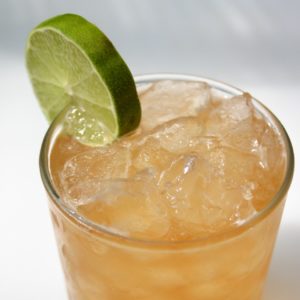
sangrita.jpg

Not to be confused with the Spanish wine-and-fruit-based alcoholic beverage sangria, sangrita (meaning “little blood”) is a traditional accompaniment to a tequila served completo; a non-alcoholic sipper that cleanses the palate between fiery doses of agave.

Years ago I was taught that sangrita is a blend of tomato and orange juices, with the addition of something spicy (hot sauce, typically) for a little kick. But further research has convinced me that this American sangrita recipe, while still enjoyable and certainly prevalent, is not altogether authentic.

Real sangrita from the Lake Chapala region of Jalisco is made with Seville orange and pomegranate juices, with powdered chiles added for heat. Taking into account that even the most cocktailian bartender (professional or otherwise) doesn’t typically stock sour oranges or pomegranate juice behind the bar, I’ve worked up a recipe that should approximate the flavor of this spicy little sour orange and pomegranate chaser while still providing an authentic experience.

1 oz orange juice (freshly-squeezed)
¾ oz - 1 oz lime juice (depending on the sweetness of your oranges)
½ oz real pomegranate grenadine
3 dashes hot sauce or ¼ tsp chile powder

Mix ingredients, chill, and serve.

This is far from the final word on sangrita. I’ll still continue to enjoy the tomato varieties (1,2,3), but I think you’ll find a brightness and depth of flavor from this version that plays better with a wider variety of mezcals and tequilas than its heavier gringo cousin.

What’s your experience with sangrita? Chime in with your stories and recipes in the comments section.

More Recipes »

Most Popular Articles

Ten Books Every Bartender Should Own »

One question I'm often asked is "Do you have any drink-related book recommendations?" Well, funny you should ask, I've compiled a list of the ten books every professional bartender or home mixologist should own. I keep every one of these close at hand and have read most of them several times. I suggest you do the same.

The Dos and Donts of Mojitos »

It's always mojito season somewhere, so this advice is timely in your area about half the year. Wether you're making them or simply enjoying them, this advice will help you look like a pro in no time at all.

The Richmond Gimlet »

The Richmond Gimlet

The flavors of the Richmond Gimlet are imbued with sunshine. Fresh mint mingling with the herbaceousness of gin and the tartness of lime have made this drink a Eugene classic for many years now.

How Not to Make a Mint Julep »

How Not to Make a Mint Julep

You'll get a lot of snarky advice on this site about how to make a proper drink, but if you ever need to know what not to do, this is the video for you.

Ten Myths You've Probably Heard in Bars »

Dave and Jeff

The world of booze can be mystifying to people that don't work in bars or around alcohol all the time. I hear a lot of assumptions about the industry I'm in that are - much like 90% of what you hear in bars - completely false. Here are a few you've probably heard yourself.

Crack or Strain »

The debate rages on: Should we try to look cool and crack open the Boston shaker or be tidy professionals and use the Hawthorne strainer the way God intended? Be sure to leave your two cents in the comments section.

How to Make an Angostura-Scorched Pisco Sour »

Angostura-Scorched Pisco Sour

The traditional garnish for a Pisco Sour is a couple of drops of bitters in the foam, but I've never been particularly impressed with the way these few paltry drops of bitters sat in their little egg-white mattress and didn't play along with the rest of the drink. I envisioned a Pisco Sour with a uniformly-distributed bitters-scorched foam: slightly crisp as the fire burnt the sugars, and slightly warm as the foam insulated the rest of the frosty cocktail from the heat. A pisco creme brulée in a glass!

How to Write a Bartending Resume »

I get so many visitors looking for tips on how to write a bartending resume that I thought I should finally post a tutorial on how to write your own. Click the headline to read more.

A Gallon of Margaritas by the Gallon »

I always love showing up to a party with a gallon jug of pre-mixed margaritas, so I've decided to share my recipe. This margarita recipe is the perfect blend of strong, sweet, and sour. But be warned: this recipe packs a serious punch.

How to Make a Daiquiri - The Bartending School Way »

How Not to Make a Daiquiri

There isn't much I can say about this video that hasn't been said already. If you've read anything I've written about cocktails, you'll understand why this video symbolizes everything wrong with the state of bartending in America today. Watch and learn, but be warned: this one isn't for the feint of heart.

About Me

My name is Jeff Morgenthaler and I'm the head bartender at Bel Ami in Eugene, Oregon.

A photo of me behind the bar.

I'm 36, I've been tending bar for 12 years and writing about it for 5. Mixing drinks has become something of a passion for me in recent years, and I strive to elevate the experience of having a drink from something mundane to something more culinary.

The writing I do here is intended as a work in progress. My recipes are like my opinions: they are constantly being revised and refined as I work them through my mind and my fingers. Comments and participation are encouraged, so please don't feel the need to tread lightly here.

2008

How to Make Your Own Tonic Water

Wednesday, May 28th, 2008
Permalink

Cinchona bark, lime, Meyer lemon, lemongrass, allspice berries and tangelo.

This subject has been covered many times before, but after numerous requests and some positive encouragement from a good friend this weekend I have decided to post my version of homemade tonic water.

The base for this recipe came from my friend Kevin Ludwig, who pioneered craft tonic water in Portland. His recipe can be found on page 76 of the March/April 2007 issue of Imbibe Magazine. This version is all mine.

My problem with homemade tonic water has always been a flavor profile that was too esoteric for the general audience. This recipe takes some of the positive qualities people have come to understand from commercial tonic water and updated them with fresh ingredients.

4 cups water
1 cup chopped lemongrass (roughly one large stalk)
¼ cup powdered cinchona bark
zest and juice of 1 orange
zest and juice of 1 lemon
zest and juice of 1 lime
1 tsp whole allspice berries
¼ cup citric acid
¼ tsp Kosher salt

Combine ingredients in a medium saucepan and bring to a boil over high heat. Once mixture starts to boil, reduce heat to low, cover and simmer for 20 minutes.

Cinchona Bark

cinchona.jpgTry a few different suppliers for powdered cinchona bark to see which you like best. Tenzing Momo has great products as a rule, but their cinchona can often be floral, which may or may not work for you. You can also find cinchona from bulk herbal medicine retailers and other specialty herb shops. I find the yellow variety to be milder than the red, so adding too many other flavors to the mix can overpower the quinine. Adjust your recipes accordingly.

Remove from heat and strain out solids using a strainer or chinois. You’ll need to fine-strain the mixture, as it still contains quite a bit of the cinchona bark. You can use a coffee filter and wait for an hour or more, or do as I do and run the whole mixture through a French coffee press.

Once you’re satisfied with the clarity of your mix, heat it back up on the stovetop or microwave, and then add ¾ cup of agave syrup to each cup of your hot mix. Stir until combined, and store in the attractive bottle of your choice.

You now have a syrup that you can carbonate with seltzer water; I use my iSi soda siphon for some nicely-textured bubbles. To assemble a gin and tonic, use ¾ ounce of syrup, 1½ ounces of gin and 2 ounces of soda water over ice.

ginandtonic.jpg

Once you’ve mastered your own tonic recipe, you can begin to experiment with different spices and fruit flavors to pair with specific gins. For instance, I’ve found that beefing up the orange peel results in a tonic that pairs nicely with Hendrick’s, but try playing off the coriander or cardamom in other gins and see what happens.

39 Comments

Food Pairings: Dinner and Absinthe

Tuesday, May 27th, 2008
Permalink

Tombo tuna with wasabi cream, butterleaf salad with Oregonzola dressing and Evonuk hazelnuts.

I love to cook, but sometimes after a long weekend it can feel like work to me. After a begrudged visit to the grocery store last night, I came home with a beautiful head of butter lettuce, some Oregon gorgonzola cheese, locally-grown Evonuk hazelnuts and two Tombo tuna steaks. I knew what would put a smile back on my face: a nice dinner and a glass of absinthe.

dinner.jpg

Tonight’s Menu:
Pan-Seared Tombo Tuna with Wasabi Cream
Butterleaf Salad with Oregonzola Dressing and Roasted Hazelnuts
Lucid Absinthe in the Traditional Preparation

cube.jpg

Absinthe has a nice way of pairing well with a wide variety of foods. It has enough acidity to cut through the fats in my dressing, yet it provides a nice, clean palate on which to balance a piece of tuna crusted in black peppercorns. All this magic in one glass, yet in order to make absinthe truly sing, you need to pay attention to preparation.

Properly-prepared absinthe is cold, a little sweet, and bitter enough to stand up to some hearty flavors. It is never consumed straight, and there is never a burning cube of molten sugar involved. So I set about filling a small pitcher with ice water, and let it rest to ensure it was nice and cold. Next I poured an ounce of absinthe into a glass, and capped the mouth of the glass with a slotted spoon upon which rested a single cube of sugar.

Absinthe louches as ice-cold water is dribbled over the sugar cube.

Patience is key here, but I knew that the payoff would be worth my time as I slowly, s-l-o-w-l-y, dripped ice cold water over the sugar cube and into the waiting shot of absinthe. The liquid gradually formed an opalescent louche (the milkiness that is the hallmark of proper absinthe) and once the glass was half-full I knew I was ready.

Gorgonzola Dressing

If you’ve never made a veined-cheese salad dressing from scratch before, you’ll be amazed at how little effort it takes.

¼ cup buttermilk
¼ cup sour cream
¼ cup mayonnaise
2 tbsp apple cider vinegar
2 oz Gorgonzola cheese, crumbled
1 tsp black pepper
pinch salt

Whisk ingredients together until combined and dressing is smooth.

The tanginess of the vinegar and Gorgonzola flirted with sweetness of the drink, and the cold from the ice water tamed the heat rising from the black peppercorn crust. Wormwood’s bitterness teased the wasabi into revealing its sweeter side, and the lush savory aromas of fennel mingled with the roasted hazelnuts for a flavor that lingered well after it was gone.

I’ve tried pairing absinthe with everything from rare hamburgers to grilled pizzettas with caramelized onions and smoked trout, and I’m constantly amazed at how well it works with the curve-balls I throw at it. What foods have you tried with absinthe? Fresh country-style pork ribs, anyone?

ribs.jpg

Photos and text by Jeffrey Morgenthaler. Thanks for reading.

18 Comments

How to Reduce by Half

Thursday, May 22nd, 2008
Permalink

Some of you are here to find out how to make my pinot gris reduction for the East of Eden, and as the directions will tell you, you’ll need to reduce the wine by half. But how can you tell when a liquid is reduced by half without pouring it into a measuring cup every five minutes? Here’s what I do:

Before you apply heat to your liquid, dip the end of a wooden spoon into the pot and let it sit there for a few seconds. You know, so that it soaks into the wood a little bit.

high.jpg

Then, using your fingernail or a table knife, make a mark where the liquid level was on the wooden spoon.

fingermark.jpg

Make another mark halfway between your nail mark and the end of the spoon. Now you have a gauge that will tell you when you’re done. When the liquid in the pot is the same height as your halfway mark, you’ve reduced that liquid by half.

low.jpg

A couple of notes:

This is only mildly accurate with straight-sided, flat-bottomed saucepots. Anything with curved or beveled edges won’t quite have the same effect.

This technique works equally well for recipes that call for a liquid to be reduced by two-thirds, or a fourth, or what-have-you. Fingernail your spoon accordingly.

11 Comments

Mixology Monday: Rum

Monday, May 12th, 2008
Permalink

Clearly I have been smiled upon by a greater power as of late, for I have been fortunate to take on so many new readers over the past month. If you’re one of those new to the site: welcome!

mxmologo.gifFor the benefit of the newcomers, I feel I should explain how things work around here. A few years ago, this guy named Paul Clarke had a great idea: let’s get all of the cocktail bloggers out there to get together and write about the same thing for a day. So one website becomes designated as the “host” and chooses a theme that everyone adopts and writes about, and then the host donates a summary of all the day’s events. (I even tried to host last December, but decided to blow the whole thing off and fly to New York to celebrate Repeal Day with my friends from Dewar’s scotch instead.)

So here I am on Sunday, having my whole day off ruined yet again as I wrack my brain trying to think of something to write about, and honestly getting quite frustrated. So, a solution: I’m going to make something using only the ingredients in my liquor cabinet and try a previously untested recipe from one of my many books on the subject of cocktails.

vics.jpg

When I think about rum, I think about Trader Vic. And when I think about Trader Vic, I think about dusting off my 1947 edition of Trader Vic’s Bar-Tender’s Guide and looking for a recipe I’ve never tried. So that’s exactly what I did. On page 209, he gives us the recipe for a Beachcomber Cocktail, calling for light rum, lime, Cointreau, maraschino liqueur and a Waring blender - all of which can be found at my house on a standard Sunday in May.

blendor.jpg

At first glance, this looks suspiciously like the poorly-translated recipe for the La Florida Daiquiri #4 found on page 215, with the substitution of Cointreau for sugar. But cocktailian tradition dictates that by changing one or more ingredients in a cocktail, we’ve created a new drink altogether, so let’s forge ahead:

Beachcomber Cocktail (Trader Vic’s Version)

2 oz light rum
½ oz Cointreau
Juice ½ lime
2 dashes maraschino liqueur

Mix in Waring mixer with shaved ice; pour unstrained into chilled champagne glass.

Maraschino Liqueur

luxardo.jpgAs an aside, maraschino liqueur comes in several forms. Luxardo is intense, heavy, with an underlying bitterness and a healthy dose of funk; I personally recommend using less than a recipe might typically call for - unless you have reason to believe the recipe in question was developed using Luxardo. Then there’s Maraska, which is sweeter, less herbaceous and much easier to work with as a sweetening component to a cocktail. Try both in an Aviation sometime and you’ll see what I mean.

The verdict? It’s gross. First of all, we’ve got two ounces of light rum, which is a big speed bump of alcohol to try to climb over. Next, the drink is blended, which to me always calls for some big, bold flavors since things tend to get lost among all of that blended ice and water. A scant tablespoon each of lime and orange liqueur, spiked with maraschino liqueur doesn’t strike me as bold, so I’m going to recommend bumping up the proportions and selecting some brands.

Right off the bat I’m going to suggest using something other than the Myers’s Platinum I used at home. Try a Puerto Rican like Bacardi, 10 Cane from Trinidad or St. Croix’s Cruzan Estate Light, which is aged for two years. Each of these rums is going to provide a slightly sweeter base with less of the acids that I find to be the hallmark of Jamaican rum.

Next, let’s use ¾ ounce each of lime and Cointreau - enough already with this “juice of ½ a lime” business. As for the maraschino, let’s try a half teaspoon if using a sweeter liqueur like Maraska, and a quarter teaspoon each of simple syrup and maraschino if using a heavier version such as Luxardo.

Beachcomber Cocktail (Adjusted)

2 oz light rum
¾ oz Cointreau
¾ oz lime juice
¼-½ tsp maraschino liqueur
¼ tsp simple syrup (optional)

Blend well with ice and pour into a chilled champagne coupe.

beachcomber.jpg

This seemed to work better with my palate, but I tend to like drinks that taste delicious. To read about a whole bunch of other tasty beverages, head over to my friend Trader Tiki’s website for the complete wrap-up of this month’s Mixology Monday, along with more rum and Tiki information than you can shake a swizzle-stick at.

14 Comments

Up, Neat, Straight Up, or On the Rocks

Friday, May 9th, 2008
Permalink

I considered naming this article “How To Take an Order Behind the Bar”, since there seems to be a problem with bartenders and servers not fully understanding the vocabulary used in their workplace. I was reminded of this while reading this thread on the StraightBourbon.com forums some time ago. Yes, there seems to be some confusion about the terms “neat”, “up” (or “straight up”) and “with a twist”, and my goal is to try to help straighten this mess out.

Neat

neat.jpg

The first - and simplest - term we’re going to examine is “neat“. “Neat” - as applied to drinks served in bars - refers to a shot of liquor poured directly from the bottle and into a glass. There is no chilling involved with a “neat” drink. There is never an additional ingredient in a drink served “neat”. You can not have a Screwdriver served “neat”. That’s not how we use the word.

Up

up.jpg

If you walk into a bar and order a Dry Martini, “neat”, you might be served a tepid shot of Martini and Rossi Dry Vermouth in a room-temperature glass. That’s how the term “neat” is used. Although you know how much I love vermouth, nothing about that order sounds appetizing. What you were probably looking for was a Dry Martini, served “up. “Up” implies that there was some preparation involved, and that there is no ice in the final product. You can have a Manhattan on the rocks, or I can give it to you “up”.

Straight Up

straightup.jpg

“Up” was originally short for “straight up“, meaning “no bullshit“. As in “I can handle the truth. Give it to me straight up.“

Where the real confusion lies is with the term “straight up”. Although I don’t know where the choaos began, these days there is a bit of conversation required when that phrase is used.

Let’s say you order a Wild Turkey, “straight up”. Your bartender should assume you mean that you want your bourbon “neat”, and serve it as so. However, if you were looking for a chilled shot of whiskey in a cocktail glass, you probably should have dropped the “straight” and asked for your drink “up”. And if, as a bartender, you’ve received an order for a Ketel One “straight up”, you should probably check with your customer to make sure they’re looking for chilled vodka and vermouth, and not a glass of warm vodka.

Twist

twist.jpg

A “twist” is always a thin strip of citrus peel, without pith and without the meat of the fruit. It derives its name from the fact that the peel is “twisted” over the surface of the drink to express the oils. Note that the default generic “twist” is made from lemon peel. Order appropriately.

The third term that causes some confusion on both sides of the bar is the word “twist”. I’ve ordered a gin martini with a twist (my preferred garnish) and received a big wedge of lemon on the side of the glass. I’ve taken an order for a gin and tonic with a twist, and had the drink sent back because I garnished with a thin strip of citrus peel. A delicate blend of gin and vermouth, the Martini is ruined by a big squeeze of lemon juice. Conversely, the bold flavors of a gin and tonic need more than a light spritzing of lemon or lime oils on the surface of the drink.

To recap:

Neat: Right out of the bottle.
Up: Chilled, and served in a cocktail glass.
Straight Up: Usually means “neat”, but check first.
Twist: A thin strip of citrus peel. Default is lemon.

26 Comments

Mint Julep Roundup: Kentucky Derby Edition

Thursday, May 1st, 2008
Permalink

The Kentucky Derby is this Saturday, and many of those watching this historic event will be doing so with mint juleps in hand. Sounds like the perfect time to jot down a couple of notes about this classic American cocktail.

istockjulep.jpg

The mint julep is another of those drinks shrouded in mystery, so in an effort to clear up some of the confusion (and possibly contribute to it) I’m going to offer up some of my ideas about what makes a spectacular drink, based on my knowledge and my palate. Feel free to take or leave the following advice as you will.

Click here to continue reading »

23 Comments

Mint Julep

Thursday, May 1st, 2008
Permalink

I’ve you’ve never made - or enjoyed - a mint julep before, be sure to check out this post, with lots of information from myself, and videos from the real experts.

mintjulep.jpg

In the bottom of a 10-12 oz glass (or a silver julep cup, if you’ve got one on hand) gently muddle together:

12 mint leaves
¼-½ oz simple syrup

Add to this mixture:

2 oz bourbon

Stir to combine ingredients, and fill glass with finely crushed ice. Garnish with the prettiest mint sprig you have, and serve.

1 Comment

How To Make Your Own Ginger Beer

Thursday, April 24th, 2008
Permalink

As far as I’m concerned, springtime is Dark and Stormy season. As the rain pummels the ground here in the Pacific Northwest, a little window of blue sky nestled between two dark clouds in the neighboring distance makes me wish I were watching the rain fall from across a dark ocean, my little Caribbean fishing boat safe and sound under that warm patch of sunlight.

fishingboat.jpg

I’d fill a tall glass with ice and a generous dose of Gosling’s Black Seal rum from Bermuda, then reach into a wooden crate and withdraw a chilly little bottle of homemade ginger beer. I’d sip the cloudy mixture of liquid sunshine and sweet, dark nectar while I mindlessly squeezed a fresh lime into the glass. Feet: Up.

The problem with living in Oregon when this mood strikes is the absence of little wooden shacks that sell cases of fresh ginger beer stacked on back porches. But with some readily-available ingredients, a recipe I’ve been revising for several years - and a few free minutes - I can easily transport myself to that little fishing boat on the sea.

Click here to continue reading »

40 Comments

« Previous
Next »

Tales of the Cocktail

Latest Product Review

Tools of the Trade: Knives

I own a small library of books on the subject of bartending. Some of these books are geared toward the professional bartender, while others are written for the home mixologist. But regardless of the intended audience, almost every book I own heartily recommends that we use paring knives for cutting fruits and garnishes. […]

Read full review here »

The Sections

  • Announcements
  • Ask Your Bartender
  • Experiments
  • General
  • Helpful Advice
  • Mixology Monday
  • My Cocktail Recipes
  • Oregon Bartenders Guild
  • Product Reviews
  • Repeal Day
  • Required Reading
  • Stories
  • Tales of the Cocktail
  • Travel
  • Vegas 2007

Syndication

By using this link, you may subscribe to this site in your favorite newsreader software.

Alternatively, you can subscribe to my email edition below and have new articles sent to you as they're published.

Offsite

Amazon Wish List
MySpace Profile
My Facebook Page
Oregon Design Collective
Tony Figoli

  • Bartenders

      Bar Stories
      Drinks Companion
      Lance Mayhew
      Maxologist
      Miss Charming
      Moving at the Speed of Life
      Spirits and Cocktails
      Joe Bartender
      Jimmy Patrick
      The Art of Drink
      Shawn Soole
      The Thinking Bartender
      Ultimate Bar Chef
  • Cocktails

      Alcademics
      Bitters Blog
      Cocktailnerd
      Days That End In ‘Y’
      D.C. Drinks
      Drink Boston
      Explore the Pour
      Imbibe Magazine
      Intoxicated Zodiac
      Lamb Martini
      Sloshed!
      My Bar, Your Bar
      Oh Gosh!
      Rookie Libations
      Slakethirst
      The Spirit World
      Underhill Lounge
      A Dash of Bitters
      Ardent Spirits
      Brilliant Cocktails
      Cocktail Chronicles
      Cocktailians
      Dr. Bamboo
      DrinkBoy
      The Gumbo Pages
      Kaiser Penguin
      Mixology Magazine
      MotoTails
      Liquid Muse
      Yes, Have Some!
  • Events

      RepealDay.org
  • Food

      Accidental Scientist
      Tea and Cookies
      28cooks
      Accidental Hedonist
      Brownie Points
      Chow
      Food and Wine
      Married with Dinner
      Megnut
      Portland Food and Drink
      Slashfood
  • Spirits

      Nonjatta
      Scottes Rum
      Whiskeyfun
      Infusions of Grandeur
      The Scotch Blog
      Whisky Grotto

    • Archives:
    • 2008
    • 2007
    • 2006
    • 2005
    • 2004
    Creative Commons License
    This work is licensed under a Creative Commons Attribution-Noncommercial-No Derivative Works 3.0 United States License.