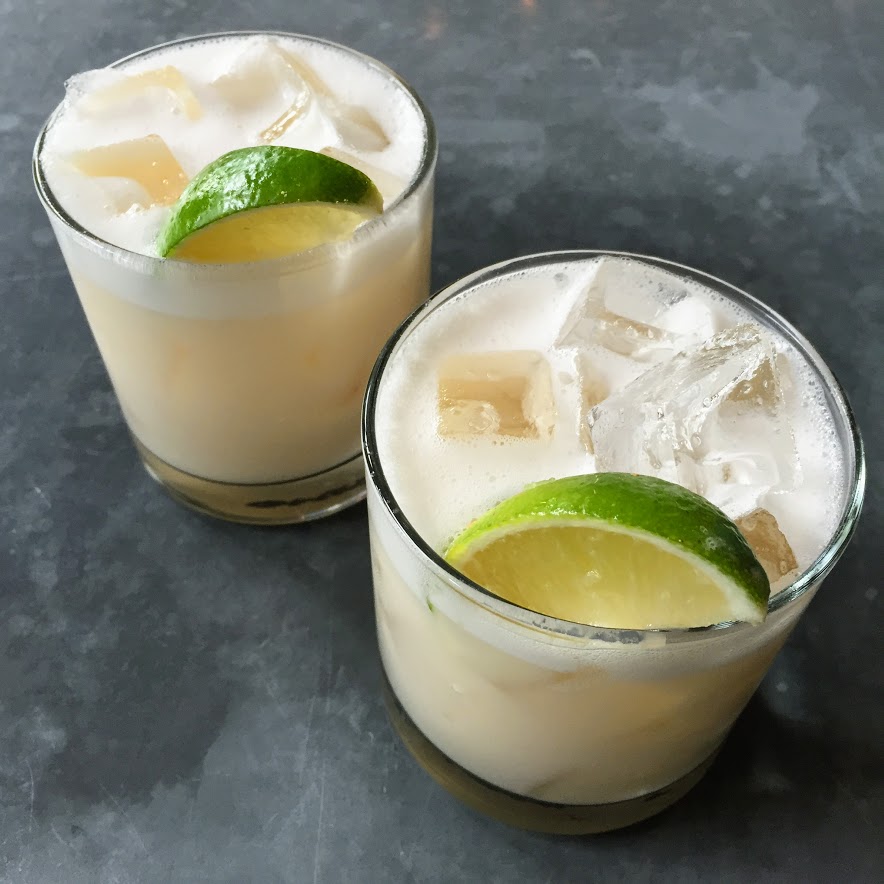
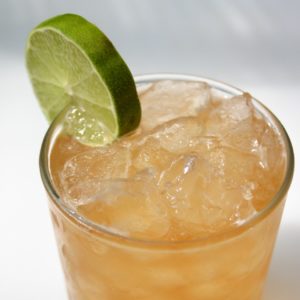
Not to be confused with the Spanish wine-and-fruit-based alcoholic beverage sangria, sangrita (meaning “little blood”) is a traditional accompaniment to a tequila served completo; a non-alcoholic sipper that cleanses the palate between fiery doses of agave.
Years ago I was taught that sangrita is a blend of tomato and orange juices, with the addition of something spicy (hot sauce, typically) for a little kick. But further research has convinced me that this American sangrita recipe, while still enjoyable and certainly prevalent, is not altogether authentic.
Real sangrita from the Lake Chapala region of Jalisco is made with Seville orange and pomegranate juices, with powdered chiles added for heat. Taking into account that even the most cocktailian bartender (professional or otherwise) doesn’t typically stock sour oranges or pomegranate juice behind the bar, I’ve worked up a recipe that should approximate the flavor of this spicy little sour orange and pomegranate chaser while still providing an authentic experience.
1 oz orange juice (freshly-squeezed)
¾ oz - 1 oz lime juice (depending on the sweetness of your oranges)
½ oz real pomegranate grenadine
3 dashes hot sauce or ¼ tsp chile powder
Mix ingredients, chill, and serve.
This is far from the final word on sangrita. I’ll still continue to enjoy the tomato varieties (1,2,3), but I think you’ll find a brightness and depth of flavor from this version that plays better with a wider variety of mezcals and tequilas than its heavier gringo cousin.
What’s your experience with sangrita? Chime in with your stories and recipes in the comments section.
One question I'm often asked is "Do you have any drink-related book recommendations?" Well, funny you should ask, I've compiled a list of the ten books every professional bartender or home mixologist should own. I keep every one of these close at hand and have read most of them several times. I suggest you do the same.
It's always mojito season somewhere, so this advice is timely in your area about half the year. Wether you're making them or simply enjoying them, this advice will help you look like a pro in no time at all.
The flavors of the Richmond Gimlet are imbued with sunshine. Fresh mint mingling with the herbaceousness of gin and the tartness of lime have made this drink a Eugene classic for many years now.
You'll get a lot of snarky advice on this site about how to make a proper drink, but if you ever need to know what not to do, this is the video for you.
The world of booze can be mystifying to people that don't work in bars or around alcohol all the time. I hear a lot of assumptions about the industry I'm in that are - much like 90% of what you hear in bars - completely false. Here are a few you've probably heard yourself.
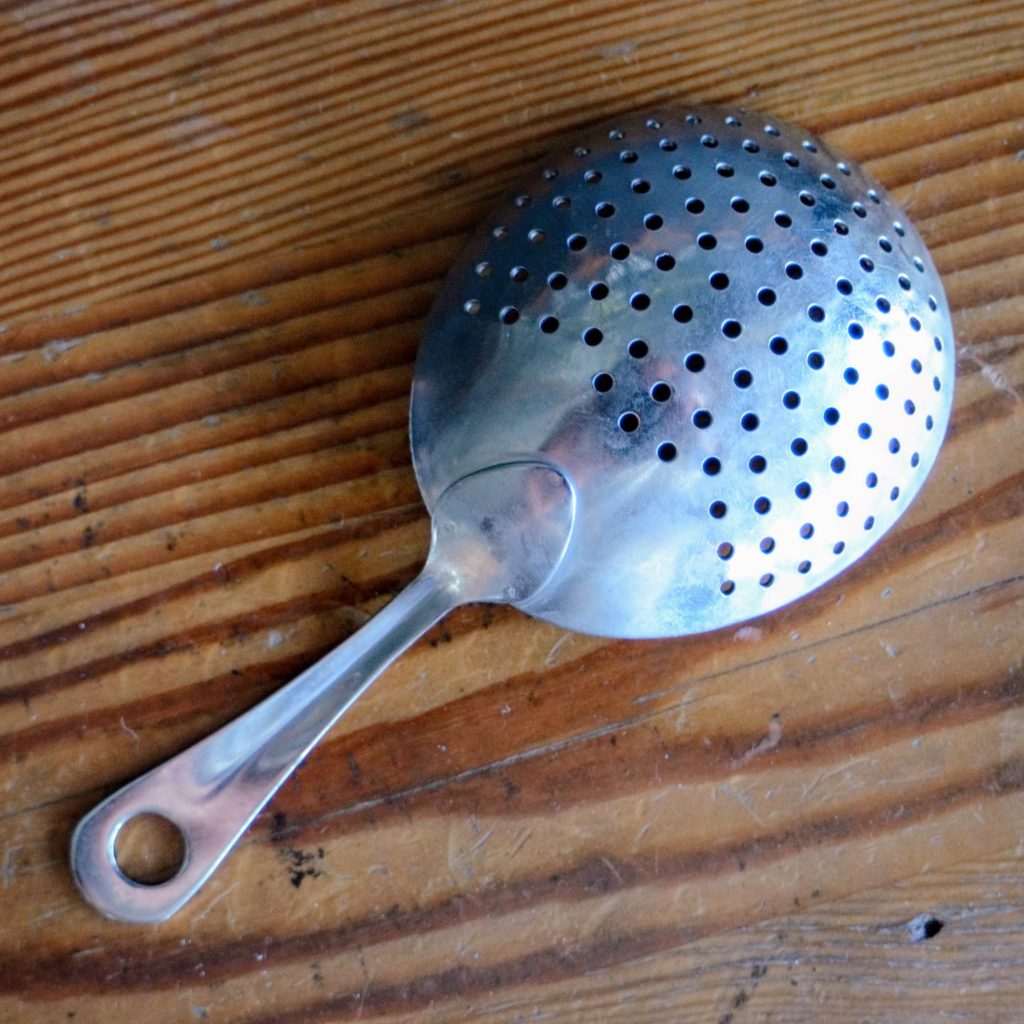
The debate rages on: Should we try to look cool and crack open the Boston shaker or be tidy professionals and use the Hawthorne strainer the way God intended? Be sure to leave your two cents in the comments section.
The traditional garnish for a Pisco Sour is a couple of drops of bitters in the foam, but I've never been particularly impressed with the way these few paltry drops of bitters sat in their little egg-white mattress and didn't play along with the rest of the drink. I envisioned a Pisco Sour with a uniformly-distributed bitters-scorched foam: slightly crisp as the fire burnt the sugars, and slightly warm as the foam insulated the rest of the frosty cocktail from the heat. A pisco creme brulée in a glass!
I get so many visitors looking for tips on how to write a bartending resume that I thought I should finally post a tutorial on how to write your own. Click the headline to read more.
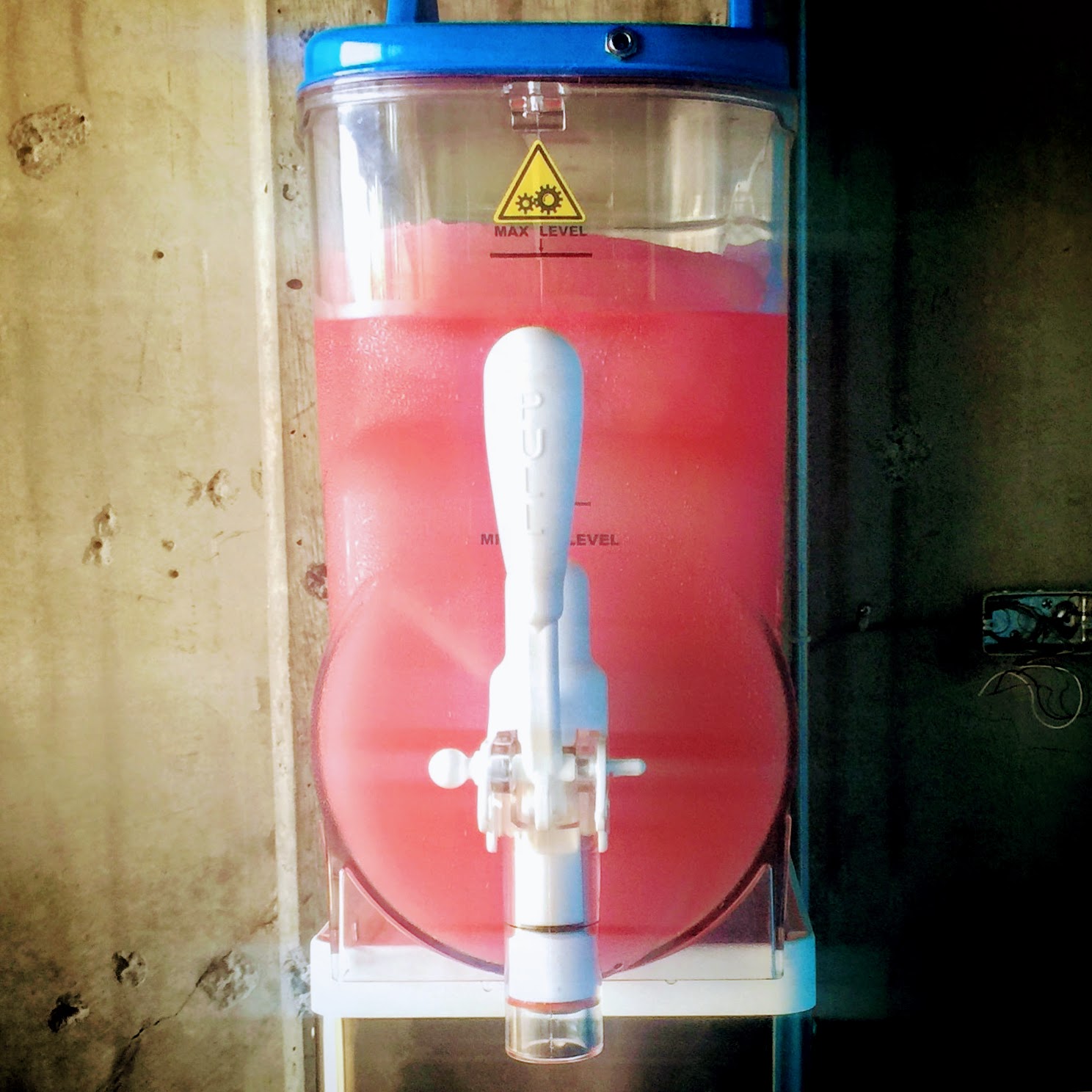
I always love showing up to a party with a gallon jug of pre-mixed margaritas, so I've decided to share my recipe. This margarita recipe is the perfect blend of strong, sweet, and sour. But be warned: this recipe packs a serious punch.
There isn't much I can say about this video that hasn't been said already. If you've read anything I've written about cocktails, you'll understand why this video symbolizes everything wrong with the state of bartending in America today. Watch and learn, but be warned: this one isn't for the feint of heart.
About Me
My name is Jeff Morgenthaler and I'm the head bartender at Bel Ami in Eugene, Oregon.
I'm 36, I've been tending bar for 12 years and writing about it for 5. Mixing drinks has become something of a passion for me in recent years, and I strive to elevate the experience of having a drink from something mundane to something more culinary.
The writing I do here is intended as a work in progress. My recipes are like my opinions: they are constantly being revised and refined as I work them through my mind and my fingers. Comments and participation are encouraged, so please don't feel the need to tread lightly here.
There are a few reasons why I’m more excited than ever for Mixology Monday this month. First of all, I’m beside myself because our host is Jimmy Patrick, who is a fellow bartender and a good friend.
Bartenders are a surprisingly rare breed in this little cocktail blogger community of ours, so he and I are often awash in a sea of pundits. Sometimes I need to write to Jimmy and ask, “How are we supposed to make 100 of those on a Friday night?”, or “What the heck are they talking about?” when something is too difficult for me to grasp either technically or intellectually. Jimmy also took over my duties when Dewar’s scotch called on my Mixology Monday and told me to pack my bags for a 10 AM flight to Manhattan the next morning. I love Jimmy Patrick.
But I’m especially enthusiastic this month because Jimmy has chosen the theme of variations for his Mixology Monday. The idea really spoke to me, because it sums up exactly what I’ve been obsessing over for the past four weeks at my new job: the makeover of Bel Ami’s cocktail menu.
Taking over an existing drink menu is a bit of a balancing act. While we didn’t want to alienate our customers and servers by jettisoning drinks that had been a part of their experience for many years, we felt that the cocktails needed a facelift. So in the end, we came up with variations of some of the house drinks as a way of introducing a bar program that focused on fresh ingredients, culinary technique, and classic proportions. I’ll illustrate this today with three cocktail case studies.
I don’t drink vodka. Most of you know that by now. I don’t care for spirits that strive to taste more like nothing than their competitors. I don’t care for drinks made with vodka, which taste merely like alcoholic versions of whatever fruit juice has been added to the glass. It’s boring liquor for boring people.
That said, I get a lot of companies wanting to send me vodka samples to review on my site. And I get a lot of them, from flavored vodka (the only thing worse than unflavored vodka), to vodka distilled from weird ingredients (as if that matters a whole hell of a lot) to vodka that’s been distilled twelve times (to provide, it seems, a unique flavorless experience).
So when I received the following email from Paul McCann at Cirrus Vodka:
Last month, I followed seven other bartenders into the Teardrop Lounge on a cold December afternoon in Portland, Oregon. The eight of us had previously spent a lot of time talking online about our common interest in craft bartending, advanced techniques, housemade ingredients and specialty spirits, but this was going to be a different sort of conversation.
We sat around a table and worked out the details of a unique concept in this country: a standalone bartender’s guild, the Oregon Bartenders Guild. Our mission is focused and simple:
To establish a collaborative community of bartenders within the state of Oregon.
Increase the overall knowledge of beer, wine, spirits and cocktail production for the betterment of their craft.
To promote awareness of the craft within the public community, through both a developed relationship with the media and an educational platform to the general populace.
To secure a congenial relationship with the OLCC, its agents and liquor companies to advance the procurement of more specialized and artisanal spirits in their portfolios.
To promote a wider, i.e., national and international recognition of Oregon’s premier mixology.
The other item on our agenda was the organization of our first event: Gin Class. And so on Sunday, January 27th, against all odds (such as a group of bartenders being able to organize anything whatsoever), we presented our first in what will become a regular series of events.
We started with a blind tasting of the four gins we were going to be working with while Lance Mayhew introduced everyone to the concept of the gin tasting.
First, Lee Medoff of House Spirits Distillery introduced the crowd to Oregon’s own beautiful Aviation Gin, and provided some valuable information about the process they take to produce the product. Then the Guild presented Kevin Ludwig, who talked about the history of gin and the use of gin in cocktails, while Kelley Swenson mixed up a batch of early-recipe Martinis with Plymouth gin, Carpano Antica Formula sweet vermouth, Regan’s Orange Bitters and Luxardo maraschino liqueur. Everyone sipped while Bend Distillery talked about the very unique process that defines their gins.
Next up was newcomer Twelve Bridges gin, presenting a unique Oregon product in that they infuse cucumber into the vapor stream during distillation (not unlike Hendricks gin out of Scotland). The gin smacks you across with face with a strong cucumber/melon nose, with a big, creamy mouthfeel to match. Dave Shenaut cranked out a big batch of Paul Harrington’s Jasmine cocktail while the crowd socialized.
To bring it all home, we brought out heavy-hitter Kevin Ludwig to present an original gin creation, the OBG #1, featuring Aviation gin, St. Germain elderflower liqueur, and Kevin’s own green walnut nocino, which was rich and oily, with heavy cardamom and cumin notes.
Many thanks to everyone who helped out and attended our inaugural event. You can visit the Oregon Bartender’s Guild website here, or pop in at our new forum here.
Well, here we are at Mixology Monday time again. Our host for this round is Marleigh over at Sloshed! and in my mind she’s picked a real winner of a theme: brandy.
I love brandy. I love to consume it, I love to sell it, and I love to mix with it. A few months ago, someone suggested I come up with a great Oregon cocktail, and as I scanned the backbar at work my eyes landed on one of my most beloved Oregon spirits, Clear Creek Apple Brandy.
If you come to Oregon for the first time, you’ll likely land in Portland. And while spending some time exploring that great city of ours should be one of the first things on your list, please take a day to explore an area nearby that is often overlooked, even by Oregonians.
From Portland, take Highway 84 east for about an hour and a half, following the breathtaking Columbia River valley to the town of Hood River. After lunch, take some time to explore the valley south of town. It’s a luscious region that lies in the shadow of Mount Hood, full of apple and pear orchards, and little family farms selling fresh berries on the side of the road. You can still buy a Coke in a glass bottle at the general store here, and spend hours exploring as you sip. It’s an incredible little place to lose yourself in during those perfect Oregon summer days.
This wonderful setting is where Clear Creek grows the apples used in their apple brandy. This drink is my humble tribute to that place.
The Cascade Crush
2 oz Clear Creek apple brandy
1 oz lemon juice
¾ oz simple syrup
1 tsp Marionberry jam
Shake ingredients over cracked ice until combined. Strain over ice in a double-rocks glass. Garnish with fresh Marionberries when in season, or with lemon peel during the cold, rainy months when you long to return to that little valley on a warm summer afternoon.
A couple of months ago, my friend Kevin from The Scotch Blog sent me a bottle of Pig’s Nose scotch in the mail.
As an aside, I highly recommend making friends with people who do things like, say, run the world’s biggest blog on scotch whiskey. Really.
Anyway, Pig’s Nose is a fun, easy-to-drink, everyday whiskey with some relaxed caramel notes, a little orange thrown in there, and - oddly enough - figs and raisins. Oranges, figs, and raisins? That sure does remind me of one of my favorite dessert wines, Pedro Ximenez… Sounds like it’s time for a cocktail!
2 oz scotch
¾ oz Pedro Ximenez
1 dash orange bitters
1 large strip orange zest
On the inside of a double rocks glass, rub the outside of the orange zest until the oils have coated the interior of the glass. Fill glass with ice.
In a cocktail shaker filled with ice, add scotch, Pedro Ximenez and orange bitters. Stir until well chilled. Strain contents into ice-filled glass, garnish with orange zest, and serve.
It’s official! Starting on Monday, January 7th, my co-bartender Scott Butler and I will be officially heading up the bar at Bel Ami, located in the Midtown Marketplace at 1591 Willamette Street here in Eugene, right across the street from the bar where I learned to mix cocktails all those years ago.
This is a great way to start off the new year, and we’re excited to be working with everyone at Bel Ami. In the 3-or-so years they’ve been open, they’ve done a tremendous business and built up a loyal clientele. Now they’ve graciously allowed Scott and me to step in and run their bar and infuse it with our own sort of, uh, charm. We’ll be continuing our education and exploration of classic cocktails, modern flavors and timeless techniques.
Owned by local track hero and businessman Roscoe Devine, Midtown (and Bel Ami) is already at the top of the list in Eugene for their perfect coffee, an incredible selection of wines, the finest food, attentive service, and elegant atmosphere. Here’s to hoping that we can help make the bar an even more enjoyable place than it already is.
The bar at Bel Ami is open at 4:30, Monday-Saturday. Scott and I hope to see you there!
One of my favorite things about the holidays is getting to spend a lot of time in airports. Since I’m usually stuck safely behind a bar five nights a week, it’s nice for me to get right in there with a swarming throng of people and be corralled through a series of lines for an hour or more.
So, to rinse off whatever anxieties I’ve accumulated during a day’s travel, I like to unwind by doing a little bar research once I arrive at my destination. Being in Los Angeles to visit my sister, and knowing where I’d go if I were Chuck Taggart, I headed downtown to sit at Southern California’s shrine to whiskey: Seven Grand.
When I’m visiting a bar of this caliber, I usually like to start with one of the classics, just to get a feel for the place. So my first cocktail was an expertly-prepared Sazerac, with Rittenhouse rye and Pernod. While I’ve got to say that I usually prefer Herbsainte to the syrupy-sweet Pernod, it became less of an issue with the punch of the 100-proof whiskey. In place of the traditional lemon peel, they used orange peel. Nice touch, dudes.
Next I decided to take a chance and venture onto the house specialty portion of the menu, something I almost never do unless I’m in a reputable establishment such as this (really, you have no idea what sort of abominations have been placed in front of me under the guise of ‘mixology’). So I ordered up an Elder Fitzgerald, which I’m guessing went something like this:
2 oz Old Fitzgerald 12 year-old bourbon
1 oz lemon juice
¾ oz St. Germain elderflower liqueur
½ oz simple syrup
1 egg white
…but I could be wrong. Old Fitzgerald is light and spicy, and a perfect compliment to the elderflower liqueur. The lemon adds the right amount to tartness, and the egg white builds a nice, creamy mouthfeel and a foamy head on the drink.
All good things must come to an end, and after four ounces of whiskey in me and very little sleep on the plane, it was about bedtime for Bonzo. Seven Grand is a little oasis in a desert of low-carb vodka/sodas and Red Bull drinks. I’ll be back, and next time I’m taking you with me, Taggart.
Yes, these are the words that I hear ringing in my ears as I find myself reading the news that Forbes Traveler has sympathetically chosen to include me in its very illustrious list of Cocktail Movers and Shakers this year.
Another drink-slinger who’s putting the Pacific Northwest on the cocktail map is Jeffrey Mortgenthaler[sic], bartender at El Vaquero in Eugene, Oregon. “There are amazing drinks being made in this region right now and people don’t really know about it.” He’s doing his best to change that. Of late, his favorite drink is an Old Fashioned using house-made orange bitters and his own brandied cherries.
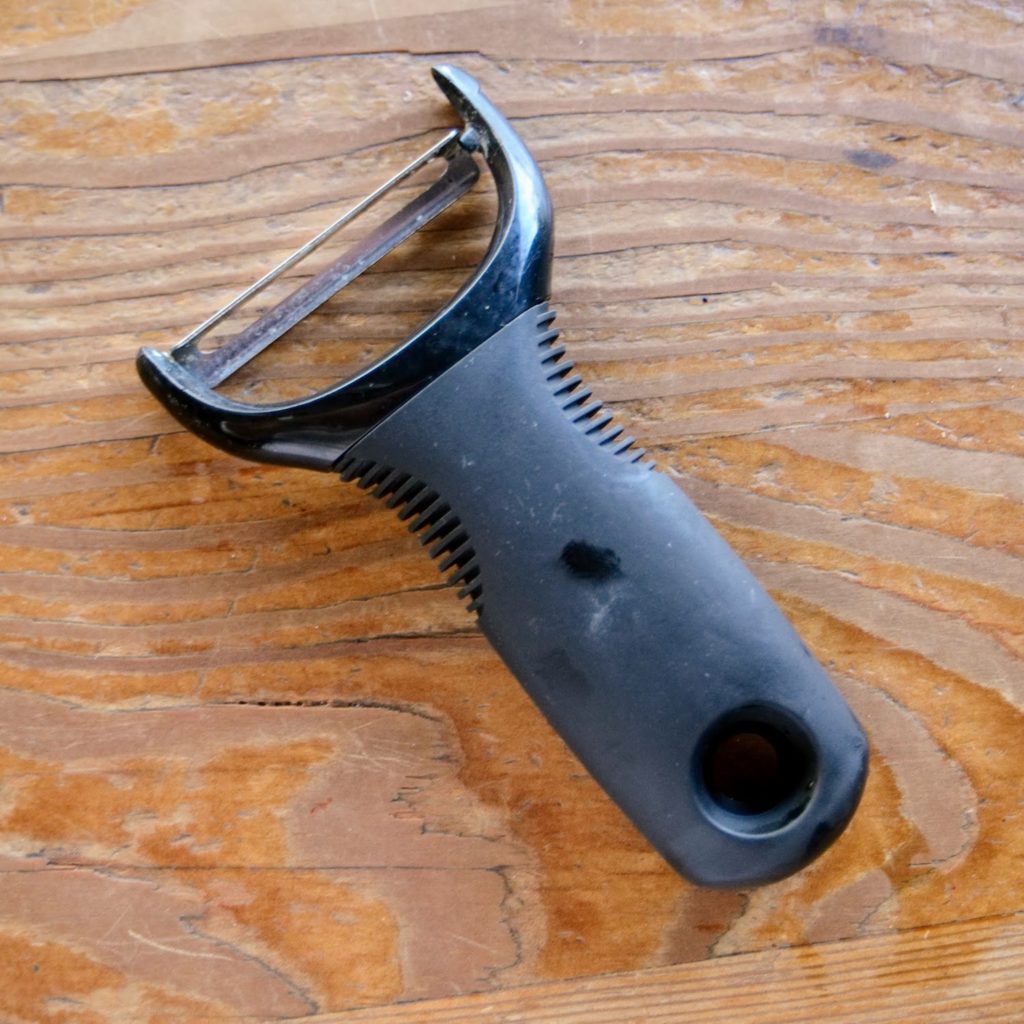
I own a small library of books on the subject of bartending. Some of these books are geared toward the professional bartender, while others are written for the home mixologist. But regardless of the intended audience, almost every book I own heartily recommends that we use paring knives for cutting fruits and garnishes. […]